
Telescopic Unguyed Towers for Fast and Stable Deployment
2026-02-24
Telecom, surveillance, and monitoring Telescopic unguyed towers have a free-standing elevation solution that is required where the use of guy wires is not feasible. These towers are constructed using high-strength aluminum and designed to be quickly deployed without using external support cables so that they provide reliable height and structural stability.
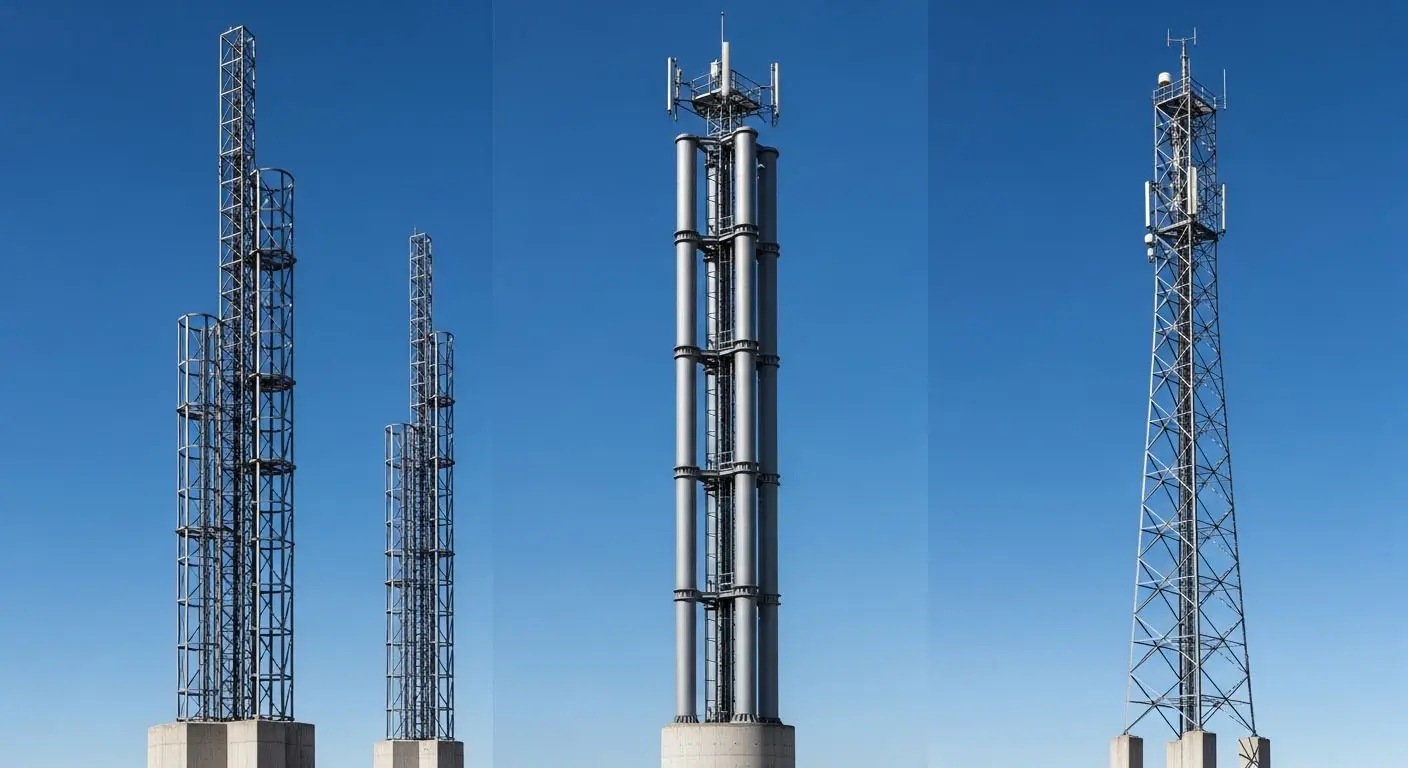
Unguided telescoping towers include permanent and mobile versions that have a small footprint, yet an assertive increase in height, so that they can be used in demanding field applications and at locations that have limited space.
Structural Design
The unguyed tower has a multi-section telescoping mast assembly that is vertically extended out of a small nested system. This free-standing design does not require the use of guy wires and still performs well during strong wind weather as well as carrying capacity.
The usual tower models in this genre extend between approximately 39 ft and 106ft (depending on the configuration).
All sections fit with security locks when deployed in the field so that operation is safe and stable.
High-Strength Aluminum Construction
These towers are manufactured from aircraft-grade structural aluminum, providing an excellent strength-to-weight ratio. Aluminum towers can deliver up to 80% of the payload capacity of comparable steel towers while weighing roughly 70% less, which improves transport and installation efficiency.
Material advantages include:
-
Lightweight for easier transport
-
Natural corrosion resistance
-
Long service life outdoors
-
Reduced maintenance requirements
-
Strong structural integrity
This construction makes the tower suitable for harsh and remote environments.
Key Performance Specifications
While specifications vary by model, typical unguyed tower capabilities include:
-
Maximum height with mast: up to 106 ft (32 m)
-
Maximum payload: approximately 350–600 lb depending on model
-
Maximum sail area: up to 35 sq ft
-
Maximum unguyed wind rating: about 70 mph
It is important that antenna size and loading remain within unguyed limits; heavier loads may require guyed tower systems.
Rapid Deployment Capability
Unguyed telescopic towers are engineered for quick field setup. Many aluminum telescoping systems can be fully deployed in 15 minutes or less, allowing teams to establish elevated platforms quickly when time is critical.
This rapid-response capability is especially valuable for emergency and temporary operations.
Advantages of Unguyed Tower Design
Choosing an unguyed tower provides several operational benefits.
No Guy Wires Required
The freestanding structure eliminates the need for anchor points and guy lines, which simplifies site planning and reduces ground footprint.
Smaller Installation Area
Because there are no support cables, the tower can be installed in confined spaces such as:
-
Urban environments
-
Rooftops
-
Parking areas
-
Temporary field sites
Faster Setup and Relocation
With fewer components to install, deployment and teardown times are significantly reduced compared with guyed systems.
Improved Safety and Accessibility
Tilt-down or telescoping operation allows maintenance to be performed at ground level, reducing climbing requirements.
Typical Applications
Telescopic unguyed towers are widely used across multiple industries where rapid, reliable elevation is required.
Common use cases include:
-
Temporary telecom coverage
-
Emergency communications
-
Military and defense operations
-
Surveillance and security systems
-
Broadcast and wireless links
-
Environmental monitoring
-
Event connectivity
-
Remote site testing
Their portability and stability make them a preferred solution for mission-critical deployments.
Mobile and Trailer Integration
Unguyed towers are often integrated into mobile platforms such as trailers or transportable systems. Lightweight aluminum construction allows the complete tower system to be moved and redeployed as operational needs change.
Portable aluminum telescoping towers are commonly used in:
-
Cell-on-Wheels (COW) systems
-
Mobile command centers
-
Disaster recovery units
-
Rapid response communication platforms
These integrated systems support fast network restoration and temporary coverage expansion.
Design Considerations
When selecting a telescopic unguyed tower, engineers typically evaluate:
-
Required operating height
-
Antenna weight and wind area
-
Local wind conditions
-
Site footprint limitations
-
Deployment frequency
-
Transport requirements
If payload or wind exposure exceeds unguyed limits, a guyed or heavy-duty tower configuration may be more appropriate.
Why Choose a Telescopic Unguyed Tower?
Unguyed aluminum towers offer a strong balance between mobility, speed, and structural performance. They are especially valuable when projects demand:
-
Rapid deployment
-
Minimal ground disturbance
-
Compact installation footprint
-
Reliable freestanding stability
-
Flexible mobile operation
For many telecom, defense, and monitoring missions, this tower type provides the fastest path to elevated coverage.
Conclusion
The telescopic unguyed towers offer high performance of freestanding stability, lightweight aluminum and quick deployment features. Their heights are over 100 feet and their payload capacity is suitable to most communication systems making them an effective option to temporary and permanent elevation requirements.
In supporting emergency communications, surveillance systems or wireless infrastructure, an unguyed telescopic tower designed well will provide reliable functionality when speed and flexibility are the most important factors.

Hey, I’m Chunjian Shu
"X.Y. Tower: Reliable, innovative solutions for high-quality towers and electrical equipment with professional service.
