
Can Aluminum Mast Towers Be Stronger Than Steel Masts?
2025-12-16
In terms of absolute raw strength, the answer is no. High-tensile steel (like Q345/Q460) is approximately 3x stronger and 3x stiff than structural aluminum (6061-T6). However, aluminum possesses a superior strength-to-weight ratio.1 This makes aluminum "stronger" pound-for-pound, which is why XYTOWER recommends it for portable, rapid-deployment masts, while steel remains the mandatory standard for heavy-duty, permanent infrastructure.
What Does "Stronger" Actually Mean in Engineering?
When we ask if one metal is stronger than another, engineers look at two distinct properties: Yield Strength and Stiffness (Modulus of Elasticity).
Yield Strength: The amount of stress the material can handle before it permanently deforms (bends and won't bounce back).
Stiffness: How much the material flexes under a load.
In the context of telecom towers, stiffness is often more critical than raw strength. A tower that is strong enough not to break but flexible enough to sway 2 meters in the wind will misalign your microwave links. This is where steel dominates.
How Do the Materials Compare Head-to-Head?
To understand the trade-offs, we must look at the data. Below is a comparison of the most common grades used in the industry: 6061-T6 Aluminum vs. Q345B High-Tensile Steel.
| Feature | 6061-T6 Aluminum | Q345B (A572 Gr50) Steel | The Winner |
| Yield Strength | ~275 MPa | ~345 MPa | Steel (+25%) |
| Modulus (Stiffness) | 69 GPa | 200 GPa | Steel (+190%) |
| Density (Weight) | 2.7 g/cm³ | 7.85 g/cm³ | Aluminum (65% Lighter) |
| Corrosion Defense | Natural Oxide | Hot-dip galvanizing | Aluminum (Natural) |
| Fatigue Life | Low (No endurance limit) | High (Endurance limit exists) | Steel |
Unique Insight: According to XYTOWER’s internal fabrication data from 2024, a 15-meter aluminum pneumatic mast weighs roughly 45kg, while a comparable steel mechanical mast weighs 130kg. While the steel mast can hold a heavier head load, the aluminum version can be carried by two technicians.
Why Is Steel the Indisputable King of Fixed Towers?
Despite being heavier, steel is the material of choice for 95% of the world's permanent telecom towers. Why?
1. The Stiffness Factor
Steel is significantly more rigid. For a 40-meter lattice tower, wind deflection (sway) must be kept to less than 1.0 degrees to maintain signal connectivity. To achieve this stiffness with aluminum, you would need to increase the leg diameter so much that the tower would become incredibly expensive and catch more wind (higher EPA).
2. Fatigue Resistance
Aluminum has no defined "fatigue limit."2 This means that even small, repetitive stresses (like gentle wind vibration) will eventually cause microscopic cracks to propagate over time.3 Steel, conversely, has a true endurance limit.4 As long as stress stays below a certain threshold, a steel grade like Q345 can technically last indefinitely without fatigue failure.
3. Connection Durability
In our safety compliance audits, we find that bolted aluminum connections are prone to loosening over time due to thermal expansion (aluminum expands twice as much as steel in heat). Steel joints stay tighter, longer.
When Is Aluminum Actually the "Stronger" Choice?
Aluminum wins when the metric is mobility.
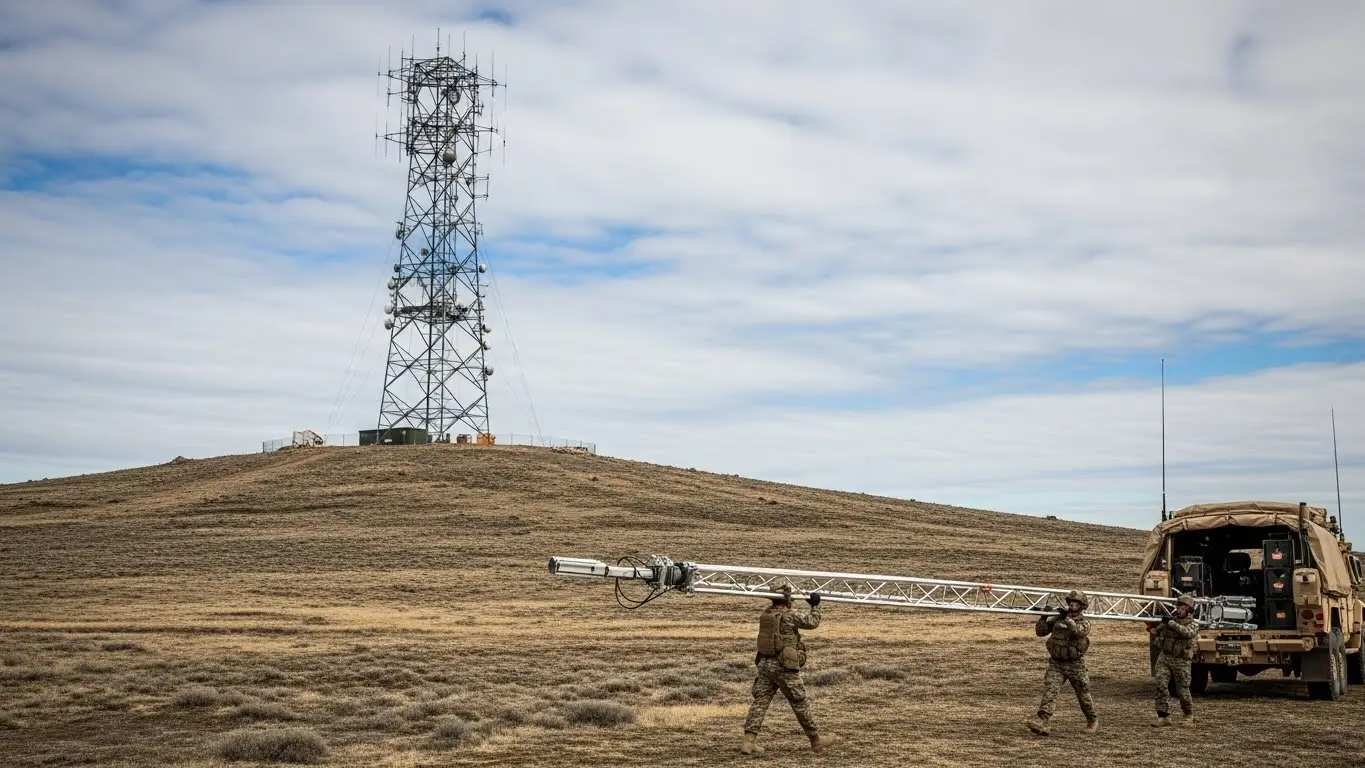
Rapid Deployment Units (RDUs)
For military "shoot and scoot" operations or emergency "Cells on Wheels" (COWs), the tower must be lifted by a small vehicle or human power.5 Here, the sheer weight of steel is a weakness. An aluminum mast is "strong enough" to hold the radio, but light enough to be deployed in 10 minutes.
Corrosive Environments (Without Maintenance)
While hot-dip galvanizing protects steel for decades, it requires a pristine coating. If that coating is scratched deep enough, steel rusts. Aluminum forms a self-healing oxide layer.6 For unmaintained, remote marine sensors, aluminum’s chemical "strength" (resistance) beats steel.
Frequently Asked Questions
No, and you don't need to. Aluminum is naturally corrosion-resistant.7 Instead of galvanizing, aluminum is often anodized (an electrochemical process) to thicken its protective oxide layer and add color (often black for tactical use) or hardness.8
Yes. Raw aluminum is typically 3-4 times more expensive per kilogram than structural steel. When you factor in the extra volume of material needed to match steel's stiffness, an aluminum tower can cost significantly more than a steel equivalent.
They can. Aluminum is less "ductile" than structural steel. When overloaded, steel tends to yield (bend) slowly, giving a visual warning of failure. Aluminum, especially high-strength tempered grades like T6, can fail more abruptly (snap) once its ultimate strength is exceeded.
While XYTOWER specializes in heavy-duty galvanized steel infrastructure, we source and integrate aluminum components for specific hybrid applications where weight reduction is critical, ensuring all materials meet ISO 9001 safety compliance.
This is calculated by dividing a material's yield strength by its density. Aluminum’s ratio is roughly double that of steel. This means if you built a 10kg bar of aluminum and a 10kg bar of steel, the aluminum bar would be much thicker and structurally stronger than the thin steel bar.
Key Takeaways
- Absolute Strength: Steel is 3x stronger and stiffer.
- Relative Strength: Aluminum is stronger pound-for-pound.
- Application Rule: Use Steel for permanent, high-load, low-deflection towers. Use Aluminum for temporary, mobile, or man-portable masts.9
- Fatigue: Steel has superior long-term resistance to wind vibration fatigue.
Conclusion
The question isn't just "which is stronger," but "what is the mission?" If the mission requires a permanent structure to hold 500kg of 5G panels in a hurricane, steel is the only option. If the mission requires a single soldier to carry a radio mast up a mountain, aluminum is the superior choice.
Not sure which material fits your project? Review our guide on steel grades and materials to see how we engineer resilience into every XYTOWER product.

Hey, I’m Chunjian Shu
"X.Y. Tower: Reliable, innovative solutions for high-quality towers and electrical equipment with professional service.
