
Cell Towers Near Nigeria: Coverage Expansion Insights
2025-10-25
A cell tower near Nigeria is a critical piece of modern infrastructure. This structure is the backbone of Africa's largest and most populous economy. Nigeria's society is mobile-first. Connectivity is not a luxury. It is essential for finance, commerce, education, and daily life. As the nation expands its 4G networks and rolls out 5G, the demand for more towers is intense.
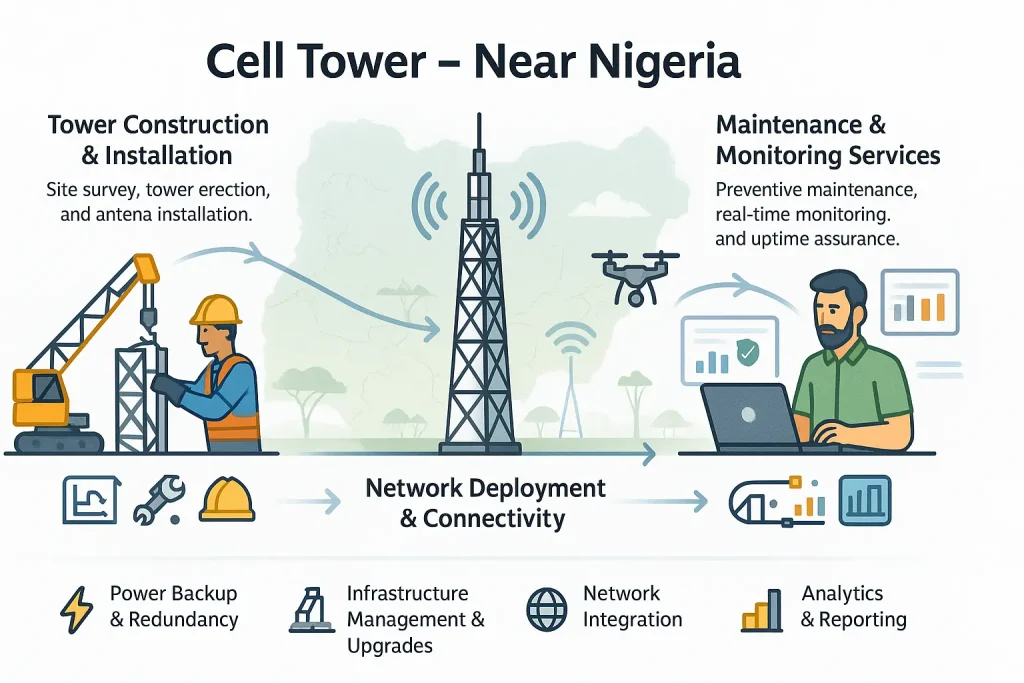
This article explores the coverage expansion insights, key market drivers, and challenges for cell towers in Nigeria.
The Indispensable Role of Cell Towers in Nigeria's Economy
Nigeria's economy runs on mobile connectivity. The cell tower is the physical asset that makes this digital life possible.
Powering a Mobile-First Society
Nigeria has over 200 million people. A vast majority of them access the internet primarily through mobile devices. This mobile-first status means that the quality and reach of the wireless network directly impact economic output. Cell towers are the connection point for millions of smartphones. They support the voice and data traffic that powers the nation. A reliable signal is the foundation for all digital services.
Enabling the Fintech Revolution
The financial technology sector in Nigeria is a global success story. Companies like OPay, PalmPay, and Kuda have brought financial services to millions. This entire ecosystem operates on the mobile network. Users send money, pay bills, and access loans from their phones. These instant transactions require a stable data connection. Cell towers provide this necessary link. They are the unseen pillars of Nigeria's digital banking boom.
Fueling E-Commerce and the Digital Marketplace
E-commerce platforms like Jumia and Konga depend on connectivity. Small business owners also use social media platforms to sell goods. They connect with customers, manage payments, and arrange logistics using their phones. Without widespread mobile coverage, this digital marketplace cannot function. Cell towers expand the map for e-commerce. They bring new customers and businesses online.
Key Drivers of Cell Tower Expansion in Nigeria
The demand for new tower construction in Nigeria is high. This growth is fueled by a combination of population, technology, and government policy.
Massive Population and Data Demand
Nigeria has a large and young population. This demographic is tech-savvy and consumes a high volume of data. The use of video streaming, social media, and online gaming is rising fast. Mobile operators like MTN and Airtel report consistent growth in data traffic. This rising demand puts a strain on the existing 4G network. Operators must expand capacity. This means adding more equipment to existing towers and building new ones.
The 5G Rollout
The launch of 5G services is a major driver for new infrastructure. Operators have started deploying 5G in major cities like Lagos, Abuja, and Port Harcourt. 5G technology requires a much denser network than 4G. The high-frequency signals provide fast speeds. These signals also have a shorter range. This means operators must build more sites. This includes traditional macro towers. It also includes small cells on buildings and street poles.
Government Initiatives and National Broadband Plan
The Nigerian government supports this digital expansion. The Nigerian National Broadband Plan (NNBP 2020-2025) set ambitious targets. One key goal is to achieve 90% 4G population coverage. It also aims to provide 5G to major cities. The Nigerian Communications Commission (NCC) works to license spectrum. It also tries to streamline regulations. This government focus encourages investment in network infrastructure.
The Dominance of Independent TowerCompanies
Nigeria's tower market is mature. It is dominated by independent infrastructure companies, known as TowerCos. Major operators like MTN and Airtel sold their tower portfolios. They sold them to large TowerCos like IHS Towers and American Tower Corporation (ATC). This is a strategic move. It allows operators to free up capital. They can then invest that capital in 5G spectrum and active equipment. The TowerCos focus on building and managing the passive infrastructure.
The Business Model: Colocation and Infrastructure Sharing
The independent TowerCo model is built on sharing. This model is the key to efficient network expansion in Nigeria.
What is Colocation?
Colocation is the core business of a TowerCo. The TowerCo builds and maintains a single cell tower. It then leases space on that tower to multiple mobile operators. MTN, Airtel, and 9mobile can all place their antennas on the same structure. Each operator installs its own radio equipment. They all share the physical tower, power supply, and security.
Benefits of the Shared Model
This sharing model has many benefits. It is highly efficient. It prevents the duplication of building three towers side-by-side. This saves significant capital. It also reduces the environmental footprint. For operators, it lowers operational expenses. They split the cost of power and maintenance. This model allows operators to expand their networks faster. They can enter new areas by leasing space on an existing tower.
Key Challenges Facing Tower Deployment in Nigeria
Building and operating a cell tower near Nigeria is extremely difficult. Companies face major logistical, financial, and security obstacles.
The Critical Power and Energy Dilemma
The single biggest challenge in Nigeria is power. The national electricity grid is unreliable. Most cell towers are not connected to a stable grid. This means they must generate their own power 24/7. The primary solution for decades has been diesel generators. A large TowerCo may manage tens of thousands of generators. This creates huge problems. Diesel fuel is expensive. Its price fluctuates. It also requires a massive logistics operation to deliver fuel to thousands of remote sites.
High Operational Expenses
The reliance on diesel drives up operational expenses (OPEX). Power costs can be the largest single operating expense for a TowerCo in Nigeria. This money could be used to build new towers. Instead, it is spent on fuel. This financial drain is a major constraint on coverage expansion.
Security and Vandalism
Cell tower sites are targets for theft and vandalism. This is a severe problem. Criminals steal diesel fuel. They also steal high-value batteries used in backup systems. They may even steal copper wiring and generator parts. This theft causes network outages. It also endangers maintenance staff. Tower companies must spend a great deal on security. This includes building high fences, hiring guards, and using remote monitoring.
Regulatory and Right of Way (RoW) Hurdles
Building a new tower requires many permits. The regulatory landscape in Nigeria is complex. Tower companies must deal with federal, state, and local government agencies. Each agency may have different rules and fees. Securing a Right of Way (RoW) permit to build a site or lay fiber can be slow. These bureaucratic delays and multiple taxes can stall projects. This slows down the pace of network expansion.
Fiber Backhaul Deficit
A cell tower must connect to the core network. This connection is called backhaul. For 5G to work, it needs high-capacity fiber optic backhaul. Many towers in Nigeria, especially in rural areas, use microwave links for backhaul. Microwave is reliable. It does not have the capacity for 5G data loads. Laying new fiber is a major challenge. It is expensive. It also requires navigating the same difficult RoW and permitting process.
Solutions and Innovations in Nigerian Tower Infrastructure
Tower companies are actively working to solve these challenges. Innovation is a necessity for survival and growth in the Nigerian market.
The Shift to Green Energy
The best solution to the power problem is to stop using diesel. TowerCos are investing heavily in green energy. They are deploying hybrid solar solutions. This involves installing solar panels at tower sites. These panels charge large battery banks. The system runs on solar and battery power. The generator is only used as a final backup. This strategy drastically cuts diesel consumption. It lowers operational costs. It also reduces carbon emissions.
Advanced Battery Technology
The move to green energy depends on batteries. Companies are using advanced lithium-ion batteries. These are more efficient than old lead-acid batteries. They charge faster and last longer. They are also a smaller target for theft compared to diesel. Managing these power systems is a high-tech operation. Companies use remote monitoring to check the status of thousands of sites from a central hub.
New Tower Designs and Small Cells
The need for 5G in cities is changing tower design. In dense areas of Lagos, building new 100-meter towers is not possible. Companies are using rooftop sites. They are also deploying small cells. These are low-power nodes. They can be mounted on streetlights or the sides of buildings. This brings the 5G signal closer to the user. This urban densification is a key part of the 5G strategy.
Nigeria's Expansion in a Global Telecom Regional Expansion Context
Nigeria's tower market is unique. Its challenges are part of a broader global story of telecom regional expansion. Comparing its journey provides valuable insights.
Parallels with Asian Giants (India & Indonesia)
Nigeria shares challenges of scale with Asia's largest markets. The push to connect over 200 million people is similar to the market for telecommunication towers in India. Both nations have massive populations. Both face a huge urban-rural digital divide. The goal of rural connectivity is a shared priority.
The logistical hurdles are also similar. Nigeria has diverse terrain. Building in the dense humidity of Lagos is different from the dry north. This mirrors the challenge of telecom tower installation in Indonesia. That market must build across thousands of different islands. Both require expert project management.
Benchmarking Against African Tech Hubs (Kenya & Egypt)
Within Africa, Nigeria's expansion can be compared to other leaders. Kenya is another major tech hub. The deployment of a 5G tower in Kenya is also a high priority. Both nations are in a race to power their digital economies.
As these networks grow, maintenance becomes vital. The operational work in Lagos is similar to the need for cell tower maintenance in Nairobi. Both cities are economic centers. Network uptime is not negotiable.
Egypt is another key African market. It serves as a data hub for the region. The need for a reliable mobile tower provider in Egypt is high. This is due to its own 5G rollout. This reflects the same demand for quality infrastructure seen in Nigeria.
Contrasts with Middle Eastern Smart City Models
Nigeria's primary challenge is broad coverage and capacity. This contrasts with the focus of Middle Eastern markets. The deployment of a telecommunication tower in Dubai is about extreme density. It is about supporting a high-tech smart city. This requires advanced stealth towers and in-building solutions.
The high standards in the Gulf are a benchmark. The level of proactive tower maintenance in Saudi Arabia is very high. This is needed to support its "Vision 2030" projects. Finding a local tower company near Arabi is essential for those specialized projects.
Differing Scales and Obligations (Brazil & USA)
The sheer scale of building in Nigeria is immense. It can be compared to communication tower construction in Brazil. Both are large, diverse countries. Both are trying to cover vast territories.
Nigeria's strategy also contrasts with developed markets. The 5G tower installation in New York is purely about densification. It uses thousands of small cells. Nigeria must pursue a dual strategy. It must densify its cities. It must also build new macro towers to expand basic coverage.
All these tower projects are a form of critical regional development. This infrastructure is the first step. It allows all other economic goals to be built on top.
Future Outlook and Opportunities in Nigeria
The future of the Nigerian tower market is focused on growth. The demand for data and connectivity is not slowing down.
The Next Frontier: Rural Expansion
The biggest opportunity is in rural Nigeria. Millions of people still lack reliable broadband. The government's Universal Service Provision Fund (USPF) helps fund this expansion. TowerCos are developing low-cost tower designs. These are specifically for rural areas. They are often fully solar-powered. Connecting these communities is the next great step.
Evolving TowerCo Business Models
Tower companies are evolving. They are not just "steel and power" companies anymore. They are becoming digital infrastructure providers. They are investing in fiber. They are offering to build and manage fiber-to-the-tower. Some are exploring edge computing. This involves placing small data centers at the base of the tower. This allows data to be processed locally. It is essential for future 5G applications.
Investment and 5G Densification
The rollout of 5G is still in its early days. It will require a new wave of investment. This investment will be for small cells in urban areas. It will also be for upgrading the power and fiber at thousands of macro sites. This provides a long-term pipeline of work for tower companies.
Summary
The cell tower near Nigeria is more than a steel structure. It is the enabler of a digital nation. It powers fintech, connects families, and builds new economies. The Nigerian tower market is large and dynamic. It faces severe challenges. Power, security, and regulations make operations difficult. Yet, the industry is innovating. It is shifting to green energy. It is embracing new technologies. The demand for 4G coverage and 5G capacity is massive. This ensures a strong future for infrastructure companies. They are building the foundation for Nigeria's digital growth.

Hey, I’m Chunjian Shu
"X.Y. Tower: Reliable, innovative solutions for high-quality towers and electrical equipment with professional service.
