
Pneumatic vs Mechanical Masts: Which System Is Better?
2025-12-15
For most users, the "better" system depends on payload and duration. Pneumatic masts are superior for rapid, short-term deployments with lighter loads (under 100 kg), offering deployment speeds of 2–5 minutes. Mechanical masts are better for heavy loads (up to 400 kg+) and long-term, unattended surveillance where zero height drift and power-free locking are critical.
Why This Matters
In 2026, the choice between pneumatic and mechanical masts is no longer just about "air vs. winch." It’s a decision that impacts your operational uptime, maintenance budget, and field safety. With the rise of heavy 5G massive MIMO antennas and high-definition surveillance pods, payload stability has become the #1 priority for many fleet managers.
If you choose a standard pneumatic mast for a heavy, long-term microwave link, you risk signal loss due to "sag" (air leakage). Conversely, if you choose a heavy steel mechanical mast for a news van that needs to move every 30 minutes, you waste valuable time and fuel. Understanding the specific trade-offs of each system is critical for your project's success.
Pneumatic Masts Explained: Speed and Efficiency
Pneumatic masts utilize compressed air to extend nested sections. They are the industry standard for lightweight mobile command centers, lighting towers, and broadcast vehicles.
The Two Types of Pneumatic Masts:
- Non-Locking: These rely on continuous air pressure to stay up. They are fast and smooth but require a running compressor to maintain height over long periods.
- Best for: Short durations (1-4 hours), light towers, photography.
- Locking (Heavy Duty): These feature mechanical locking collars (super-clamps) on each section. Once extended, you can lock the collars and turn off the compressor.
- Best for: Medium-term deployments (days/weeks) where power is limited.
Pros:
- Rapid Deployment: A 15-meter mast can fully extend in under 3 minutes.
- Lightweight: Often made of anodized aluminum (6061-T6), reducing vehicle top-heaviness.
- Clean Operation: No exposed greased cables to attract dust or sand.
Cons:
- Payload Limit: Generally lower than mechanical counterparts (typically maxing out around 150-200 kg).
- Seal Maintenance: Rubber seals wear out over time, requiring replacement every 3–5 years depending on usage.
💡 Learn More: Check our choose telescopic mast tower guide for sizing tips.
Mechanical Masts Explained: Strength and Precision
Mechanical masts use a system of interlocking screws, cables, or chains driven by an electric motor or hand crank to raise the sections. XYTOWER’s mechanical series is often built from high-strength galvanized steel for maximum rigidity.
Key Advantages:
- Zero Drift: Unlike air pressure which can fluctuate with temperature, a mechanical screw or cable holds the payload at an exact millimeter height indefinitely.
- Heavy Lifting: Capable of lifting 300 kg to 500 kg+ loads, making them ideal for heavy radar or multi-tenant comms.
- Power Independence: Once raised, they stay up without any power or air pressure. Many have manual hand-crank backups in case of power failure.
Cons:
- Slower Speed: Can take 5–10 minutes to fully extend.
- Weight: Steel mechanical masts are significantly heavier, requiring a robust vehicle or trailer chassis.
- Maintenance: Exposed cables or screws may need cleaning and greasing in sandy environments.
The Comparison: Pneumatic vs. Mechanical
Here is a direct comparison based on 2026 industry standards for a typical 15-meter (50 ft) mobile mast.
| Feature | Pneumatic (Aluminum) | Mechanical (Steel Winch) |
| Deployment Speed | Fast (2-3 mins) | Moderate (5-10 mins) |
| Payload Capacity | Low/Medium (30-150 kg) | High (100-400 kg+) |
| Height Precision | Good (with locking collars) | Excellent (Zero drift) |
| Vehicle Weight | Light (easy for vans/SUVs) | Heavy (requires truck/trailer) |
| Power Requirement | 12V/24V Compressor | 12V/24V Motor or Hand Crank |
| Maintenance | Seals & O-rings | Cables, Pulleys & Grease |
| Cost | $$(Moderate) | $$$ (Higher for heavy duty) |
Choosing Based on Your Application
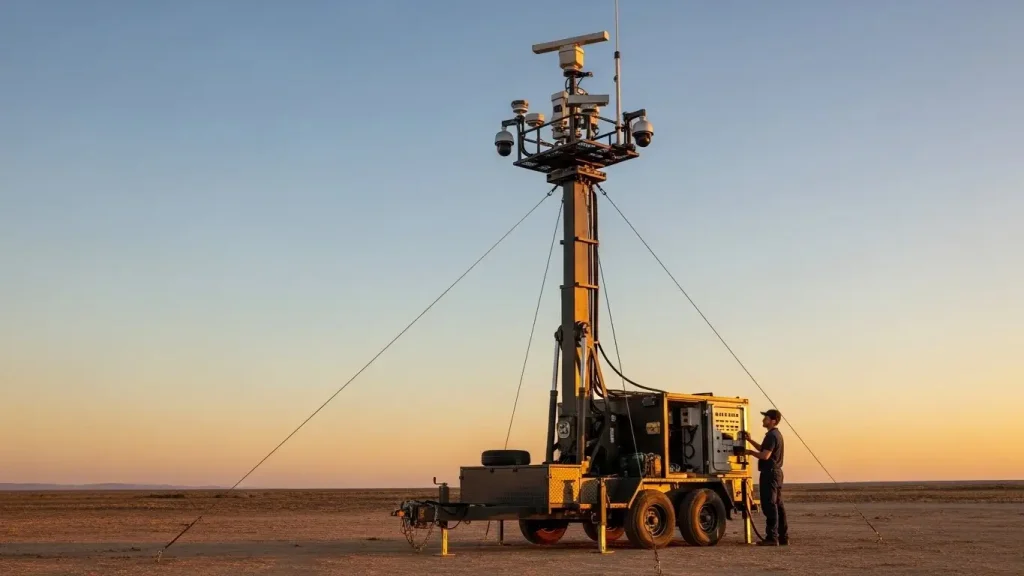
1. Military & Defense
- Verdict: Mechanical. Military radars and long-range surveillance sensors are heavy and require absolute stability. A mechanical mast ensures the equipment doesn't shift, even if the vehicle loses power for weeks.
2. Emergency Response (COWs)
- Verdict: Pneumatic (Locking). Speed is life. When a Cell on Wheels (COW) arrives at a disaster zone, getting the antenna up in minutes is vital. Locking collars allow the mast to stay up for the duration of the crisis. [Suggested Link: Telescopic Unguyed Towers Guide]
3. Commercial & Lighting
- Verdict: Pneumatic (Non-Locking). For construction lights or event WiFi, a simple non-locking pneumatic mast is cost-effective and easy to use. The compressor can run off the generator already powering the lights.
Maintenance & Cost Factors
Pneumatic Maintenance:
The primary cost is seal kits. In hot, dry climates, rubber seals can dry out. We recommend a "seal refresh" every 3-5 years.
- Tip: Keep a backup compressor solenoid valve in your kit; it's a common failure point.
Mechanical Maintenance:
The primary cost is cable/screw inspection. If you operate in sandy environments (deserts), grit can chew up nylon pulleys or jam screws.
- Tip: Use dry lubricant (PTFE spray) instead of wet grease to prevent sand buildup.
Common Mistakes to Avoid
- ❌ Ignoring the "Nested Height": Don't buy a 20m mechanical mast without checking if its retracted length fits inside your vehicle or shipping container. See our collapsible antenna tower transport guide for fitment rules.
- ❌ Overloading Pneumatic Masts: Never exceed the head load limit. Unlike a mechanical mast which might just stall, an overloaded pneumatic mast can become unstable or fail to lock properly.
- ❌ Forgetting Wind Load: A mast might lift 100kg, but can it hold a 2-meter dish in 60mph winds? Always check the wind rating (TIA-222-H).
Expert Tips from XYTOWER
- Go Hybrid: For critical comms, we often recommend Electro-Mechanical masts. They combine the precision of a screw drive with the ease of electric push-button control.
- Cold Weather Ops: Pneumatic systems can freeze if moisture gets in the air lines. If you work in freezing temps, install an inline air dryer or choose a mechanical mast.
- Manual Backup: Always ensure your powered mast has a manual hand-pump (pneumatic) or hand-crank (mechanical) override. Power failures happen in the field.
Frequently Asked Questions
Mechanical masts (specifically guyed steel ones) generally offer higher rigidity and safety in high winds due to their heavier weight and positive locking mechanism. However, any mast must be guyed (anchored) to survive winds over 40-50 mph.
Only if it is a "Locking" pneumatic mast. A non-locking mast will slowly lose pressure and lower itself within hours unless the compressor cycles on/off constantly, which drains your battery.
Generally, yes. A heavy-duty mechanical mast involves precision machining of screws or heavy-duty winch systems, making it 20-30% more expensive than a comparable aluminum pneumatic mast.
Yes. Lightweight pneumatic masts (under 10-12m) fit easily on standard pickup racks. Heavy mechanical masts usually require a reinforced bed mount or a dedicated trailer.
Yes. We manufacture custom top adapters to fit Starlink dishes, CCTV PTZ cameras, or standard 3-sector antenna mounts. Check our custom mast tower manufacture guide for details.
Key Takeaways
- Select Pneumatic for speed, lightweight transport, and temporary setups (under 24 hours).
- Select Mechanical for heavy payloads (>150kg), extreme precision, and long-term unattended use.
- Locking Collars are essential for any pneumatic mast used for more than a few hours.
- Maintenance: Seals for air, grease/cables for mechanical.
- Wind Rating: Always guy your mast if the wind exceeds 40mph, regardless of the system type.

Hey, I’m Chunjian Shu
"X.Y. Tower: Reliable, innovative solutions for high-quality towers and electrical equipment with professional service.
