
What Steel Grades Are Used in Mobile Communication Towers?
2025-12-16
The most common steel grades used in mobile communication towers are Q235B (Mild Steel) for secondary bracing and Q345B/Q355B (High-Tensile Steel) for main structural legs. In international standards, these correspond to ASTM A36 and ASTM A572 Grade 50 respectively. For heavy-load 5G towers or high-wind zones, ultra-high-strength grades like Q420 and Q460 are increasingly used to reduce weight while maintaining structural integrity.
In the world of telecommunications, the focus is often on the "G"—4G, 5G, and soon 6G. But the unsung hero supporting that technology isn't a microchip; it's the steel. Whether it’s a 100-meter lattice tower in a rural valley or a sleek monopole in a city center, the grade of steel dictates whether that structure survives a typhoon or buckles under the weight of new antennas.
At XY Tower, we process thousands of tons of steel annually for global clients. We’ve seen firsthand that specifying the wrong material grade can lead to two outcomes: dangerous structural failure or massive budget waste. In this guide, we will break down the exact steel grades used in modern tower manufacturing, compare global standards, and help you understand what your project actually needs.
Why Does Steel Grade Matter for Telecom Towers?
Steel grade determines the Yield Strength—the point at which the metal permanently deforms under stress. Using the correct grade ensures the tower can withstand "Ultimate Wind Speeds" (often >160 km/h) and heavy equipment loads (Head Load) without collapsing, while avoiding unnecessary weight that inflates shipping and foundation costs.
The "Yield Strength" Factor
When engineers design a tower, they calculate the "Yield Point."
- Mild Steel (Q235/A36): Yields at roughly 235 MPa (MegaPascals). It is ductile and forgiving but weaker per pound.
- High-Tensile Steel (Q345/A572 Gr50): Yields at 345 MPa. It can hold nearly 50% more load than mild steel before bending permanently.
If you use mild steel where high-tensile is required, the tower legs would need to be incredibly thick and heavy to support the same load. This increases the "Dead Load" (self-weight) and makes the tower expensive to transport and install. Conversely, using expensive high-tensile steel for small bracing parts that don't carry heavy loads is a waste of money.
What Are the Most Common Steel Grades Used?
The global telecom industry primarily uses two categories of steel: Mild Carbon Steel (e.g., Q235B, ASTM A36) for lighter components and High-Strength Low-Alloy (HSLA) Steel (e.g., Q345B/Q355B, ASTM A572 Gr 50) for critical load-bearing members. The choice depends on the "utilization ratio" calculated during the structural analysis.
Because tower manufacturing is a global business, you will often see grades listed in Chinese (GB), American (ASTM), or European (EN) standards. Here is how they equate.
1. Chinese Standard (GB) – The Industry Benchmark
Since a vast majority of the world's steel towers are manufactured in China (including ours), these are the most common codes you will see on mill certificates.
- Q235B: The standard mild steel. The "Q" stands for Qu Fu Dian (Yield Point), and "235" is the strength in MPa. The "B" indicates it has passed impact testing at 20°C (room temperature).
- Q345B / Q355B: The standard high-strength steel. Note: China recently updated its standards, transitioning from Q345 to Q355 to better align with European S355 standards.
- Q420 / Q460: Ultra-high strength steels used for extremely tall towers or heavy 5G transmission lines.
2. American Standard (ASTM)
- ASTM A36: The rough equivalent of Q235. Used for angles, channels, and plates.
- ASTM A572 Grade 50: The rough equivalent of Q345/Q355. This is the "gold standard" for US tower sites.
- ASTM A572 Grade 65: Equivalent to Q460, used for high-stress monopole base plates.
3. European Standard (EN)
- S235JR: Equivalent to Q235B.
- S355JR / J0 / J2: Equivalent to Q355B. The J0/J2 designations refer to impact testing at 0°C and -20°C, crucial for cold climates.
Global Steel Grade Equivalence Table
| Steel Category | Chinese Standard (GB) | USA Standard (ASTM) | European Standard (EN) | Yield Strength (Min) | Typical Use |
| Mild Steel | Q235B | ASTM A36 | S235JR | 235 MPa (34 ksi) | Secondary bracing, ladders, platforms |
| High Tensile | Q345B / Q355B | ASTM A572 Gr 50 | S355JR | 345 MPa (50 ksi) | Main tower legs, monopole shafts |
| Extra High | Q420 / Q460 | ASTM A572 Gr 60/65 | S420 / S460 | 420-460 MPa | Heavy 5G towers, high-wind zones |
Mild Steel (Q235) vs. High-Tensile (Q345): Which Is Better?
Neither is "better" universally; they serve different roles. High-tensile steel (Q345/A572) is superior for main legs because it reduces weight and wind surface area. Mild steel (Q235/A36) is better for complex welded parts and secondary bracing because it is more ductile, easier to weld, and cheaper per ton.
The Weight vs. Cost Trade-of
- Option A (All Q235 Mild Steel): To hold the weight of the antennas, the leg angles might need to be 200mm wide and 20mm thick. The total tower weight is 15 tons.
- Option B (Q345 High Tensile): Because the steel is stronger, we can use legs that are 160mm wide and 16mm thick. The total tower weight drops to 11 tons.
Even though Q345 is slightly more expensive per ton, Option B is cheaper overall because you are buying 4 fewer tons of steel and shipping less weight.
However, for simple parts like rest platforms or ladder brackets, high strength isn't needed. Using expensive Q345 there is a waste. That is why most smart designs are a "hybrid": Q345 for the legs, Q235 for the bracing.
When Is Ultra-High Strength Steel (Q420/Q460) Required?
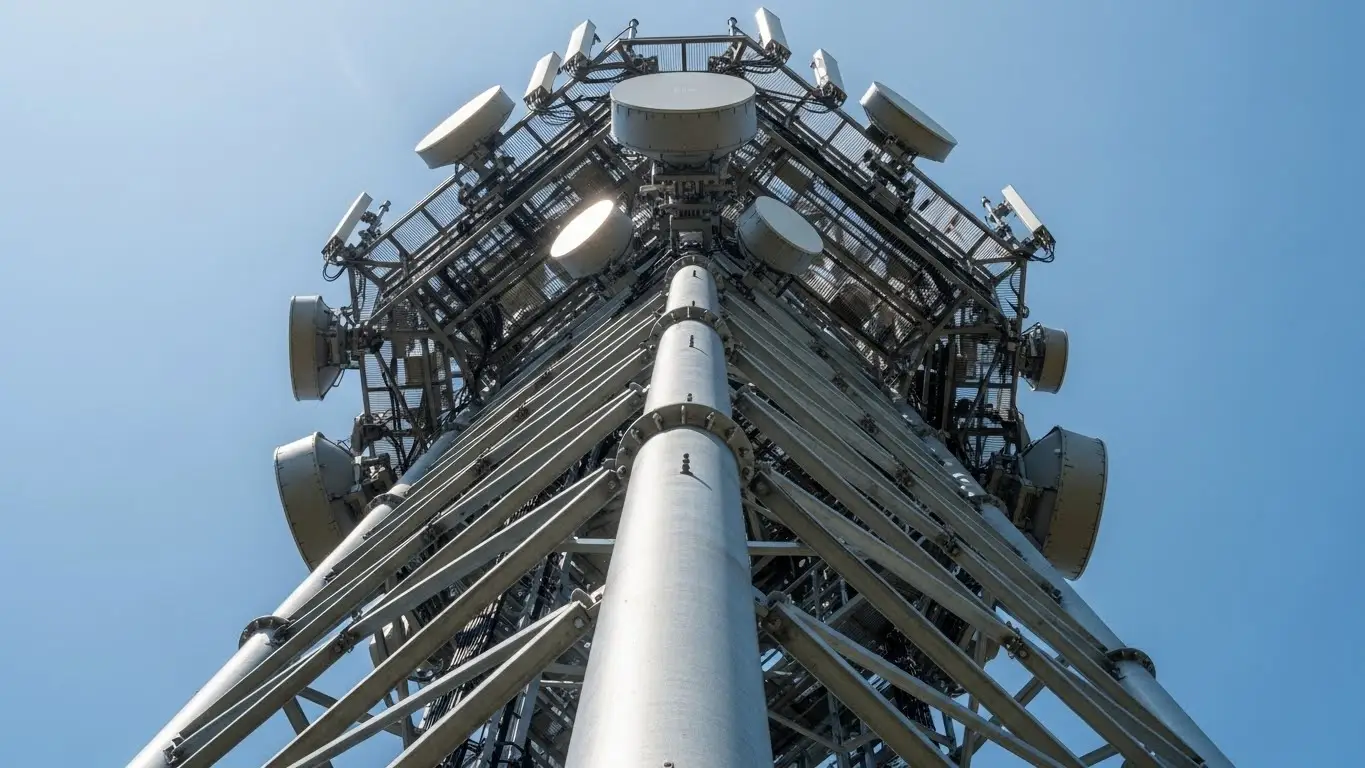
Q420 and Q460 steel grades are required for "heavy load" scenarios, such as 5G Massive MIMO deployments or towers exceeding 100 meters. These grades allow engineers to keep the tower leg dimensions small enough to minimize wind drag while supporting immense vertical weight.
The 5G Challenge
5G antennas are heavy. A legacy 4G panel might weigh 20kg, but a 5G Active Antenna Unit (AAU) can weigh 50kg+, and a single tower might carry 9-12 of them.
If we used standard steel, the tower legs at the bottom would be massive—so wide they might not fit on the foundation or into a shipping container.
By upgrading to Q460, we can keep the steel member sizes manageable. This is critical for Monopoles, where the diameter of the pole base is limited by road transport regulations.
How Does Galvanization Protect Tower Steel?
Galvanization protects tower steel by submerging it in molten zinc at 450°C, creating a metallurgical bond that acts as a sacrificial anode. For telecom towers, the gold standard is ASTM A123 (or ISO 1461), which dictates a minimum zinc coating thickness—typically 85 microns or higher for structural members—to ensure a 30-50 year lifespan.
Why Paint Isn't Enough
Paint sits on top of the steel. If it gets scratched (which happens during transport or climbing), the steel rusts.
Hot-Dip Galvanization (HDG) soaks into the steel surface. The zinc-iron alloy layers are harder than the base steel itself, providing abrasion resistance. Furthermore, zinc is "sacrificial." If the coating is scratched, the surrounding zinc will corrode instead of the steel, thanks to galvanic action.
XY Tower Quality Tip:
When inspecting your steel grades materials for telecom towers, always check the "Silicon Content" in the mill certificate (Sandelin Curve). Steel with silicon between 0.04% and 0.12% can cause the galvanization to peel (the "Sandelin Effect"). We strictly control silicon levels to ensure a shiny, adherent finish.
Choosing the Right Steel for Your Site
The "right" steel depends on your environmental conditions. For coastal areas with salt spray, specifying high-grade steel with extra-thick galvanization is critical. For extreme cold (below -20°C), you must specify "Impact Tested" grades (like Q345D** or S355J2) to prevent the steel from becoming brittle and shattering.**
1. Coastal / Humid Zones
- Risk: Rapid corrosion.
- Solution: Standard Q345B is fine structurally, but you might increase the galvanization requirement from ASTM A123 standard (85 microns) to a heavy-duty 120 microns.
2. Cold Climates (Canada, Northern Europe, Russia)
- Risk: Brittle Fracture. Standard steel becomes like glass in extreme cold.
- Solution: Do not use Q235B or Q345B. You must specify Grade D or E (e.g., Q345D), which guarantees toughness at -20°C or -40°C.
3. Urban Rooftops
- Risk: Weight limits on the building roof.
- Solution: Use highest strength steel possible (Q345 or Q460) to make the mast as light as possible, reducing the load on the building's roof beams.
Frequently Asked Questions
Technically yes, but it’s usually a false economy. Because Q235 is weaker, you need roughly 30% more of it to equal the strength of Q345. You pay for more tonnage and more shipping. It is usually only cheaper for very short, light-duty towers (under 15m).
They are effectively the same. Q355 is the newer Chinese standard designation (GB/T 1591-2018) that replaced Q345 to align with European S355. If you see "Q345" on an old drawing, you will likely receive "Q355" steel from the mill today.
Absolutely. Never accept a tower without an MTC (Mill Test Certificate). This document proves the chemical composition (Carbon, Manganese, Silicon) and mechanical properties (Yield, Tensile) match the standard. At XY Tower, we provide MTCs for every batch.
Rarely. While Corten steel resists rust without painting, it "bleeds" rust-colored water, which stains concrete bases and looks unmaintained. Hot-dip galvanization is the industry preference for aesthetics and longevity.
You check the Yield Strength on the MTC. If it’s >235 MPa (34 ksi) and <345 MPa, it falls into the mild steel category. Structurally, Q235B and A36 are usually interchangeable for secondary tower members, but you should always consult your structural engineer.
Key Takeaways
- Standard Grades: Q345B/Q355B (High Tensile) is the industry standard for main tower legs; Q235B (Mild) is used for secondary bracing.
- Strength = Savings: Using higher strength steel reduces total tower weight, saving on shipping and foundation costs.
- Galvanization: Always specify ASTM A123 hot-dip galvanization to protect the steel from corrosion.
- Cold Weather: In freezing zones, ensure you specify impact-tested steel (Grade D or J2) to prevent brittle failure.
- Verification: Always demand Mill Test Certificates to verify the yield strength and silicon content of your steel.
Need high-quality steel towers that meet global standards?
Explore our range of steel grades and materials for telecom towers to ensure your next project is built on the strongest foundation possible.

Hey, I’m Chunjian Shu
"X.Y. Tower: Reliable, innovative solutions for high-quality towers and electrical equipment with professional service.
