
Writing a Verifiable Technical Specification for Steel Transmission Towers
2026-10-21
A tower specification may be many pages long yet the manufacturer may not be able to tell from a tower drawing which one applies to a connection or which record verifies that a coating requirement is satisfied. The lack of technical terms is not the issue. It is a missing link between the project requirements, the factory's production capability and the buyer's acceptance.
This guide is to be used by engineering, procurement and construction (EPC) teams or Utility Engineers when preparing an order for X.Y. Tower's High Voltage Steel Transmission Tower. As you can see on its product page, they have options for steel-grade and hot dip galvanizing, but a project specification should make those options into measurable, approved requirements for a specific line.
When making a statement, begin with the Scope of Supply first.
Name the types of tower(s), number of towers, and the parts of the tower(s). Stating if order is for tower steel only or tower steel and accessories such as bolts & washers, cross arms, step bolts, grounding items, etc. Identify drawings and schedules that make up each tower.
Define the interface of supplier design and fabrication. If the buyer is providing approved drawings, identify who is authorized to make changes to drawings and how they are approved. If the supplier prepares drawings, specify the drawings that have to be submitted and who will approve the design. X.Y. Tower is a tower design service, but if the project requires it, then add the service to the contract.
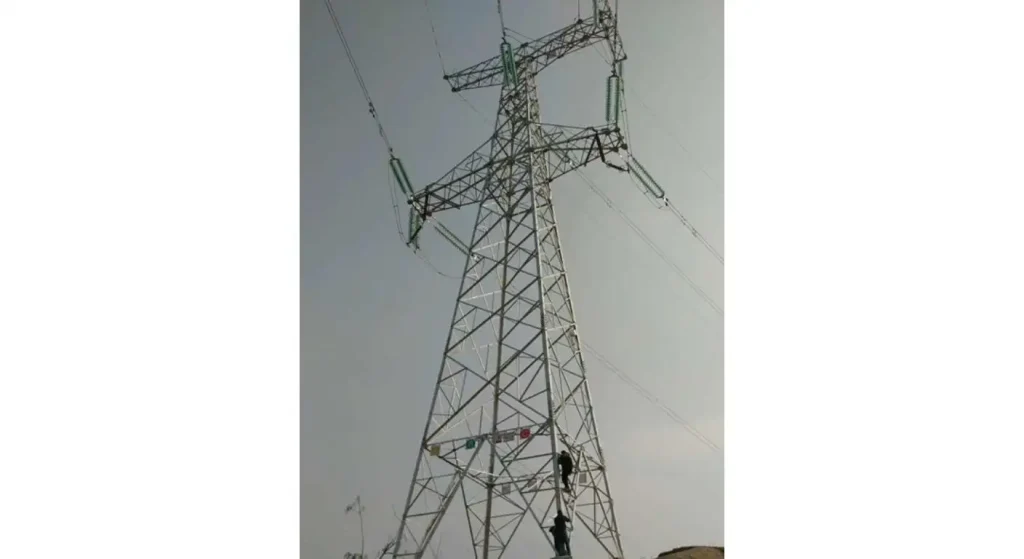
Determine the Design Basis When the Catalog values are not borrowed
Give governing project standard and engineer approved loading conditions. Add all the required actions of the wind and other environment conditions, conductor and ground-wire loads, angles of the lines and so on. Describe variants of a tower and extensions to them as states.
Avoid adding a generic wind rating to all tower schedules. Values used for design shall be from the project approved criteria. If a requirement changes in between, indicate this by tower type or location to ensure the factory are working with one common set of information.
Drawings and Revisions are LOCKED DOWN!
Explain drawing register, numbering system and revision approval system. The fabrications drawings should specify the type of tower, the tower members marks, connection information and appropriate bill of materials. The factory should be able to demonstrate what revision they used to create a finished product.
When a drawing does not match the schedule, or a component cannot be fabricated, as shown, a written response is required. This is not to say that a workshop change should be quietly adopted as the design. Establish procedure for making technical enquiries, responding to enquiries and including them in published drawings.
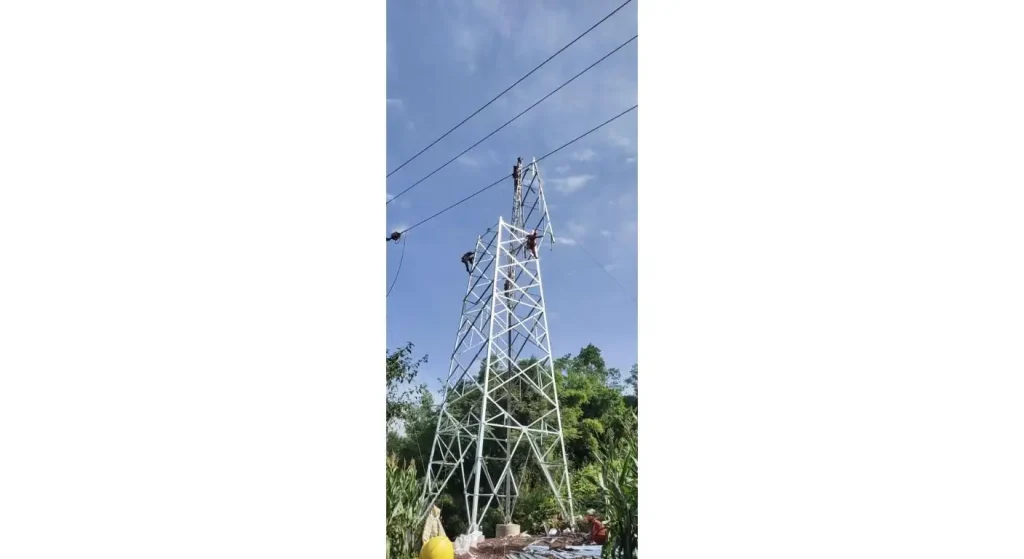
Indicate the component made of steel.
Identify the approved grade for member(s) or group of members and associated material standard and certificates required. According to the X.Y. Tower's High Voltage Steel Transmission Tower page, the material used in the tower can be either Q235B, Q355B or Q420B. Selection of the grades will be at the discretion of the project engineer and not the supplier – the supplier list cannot be used as a replacement for the selection of grade(s).
Explain how certificates will be connected to the input of materials and completed member marks. If substitutions can be made, detail the approval process prior to manufacture. This allows material compliance to be traced back from the steel-purchasing point.
Improve ability to inspect Fabrication Requirements.
Specify at least the following project tasks: Check length of cut, straightness, hole size, and connection geometry. Find important connections like leg splices, cross-arm connections and foundation attachments. Specify tolerances or reference documents to determine acceptance, instead of merely stating “good workmanship”.
If trial assembly is necessary, indicate the tower/section that is to be assembled, who will witness the assembly and what records should be made available for release. Decide how to mark and prevent packing of a rejected component with accepted components.
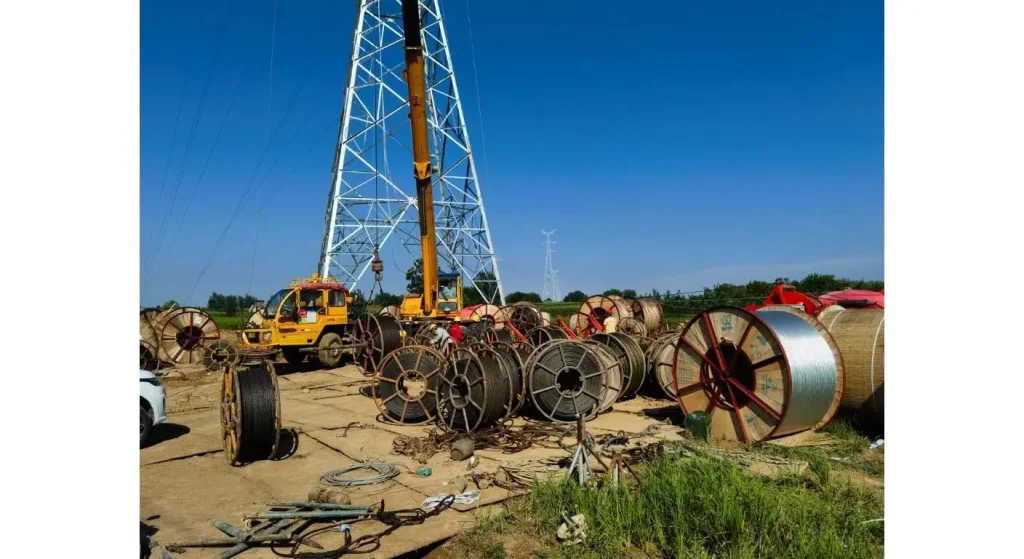
Specify which Complete Connection Set to use.
Tower members can't be accepted without their fasteners. Give the bolt schedule, grades, dimensions and protective finish and quantities required. Identify the take off of any spare quantities and packing by tower or erection section of small parts.
The Tower Steel Fittings page of X.Y. Tower features information on bolts, washers, brackets and other tower fittings. The technical specification should make that general range become a detailed list that corresponds exactly to the approved structure.
Explain what Coating Acceptance and Repair is.
Describe the acceptable coating process and specification, and its inspection and reporting requirements. On this page, X.Y. Tower specifies that this product is hot dip galvanized, and indicates an average value for the thickness of the zinc layer. The project should develop its own acceptance criteria, which should specify the measurement and assessment of the various parts of the project.
Include the treatment of blocked holes, damage, repair and legibility of piece marks after coating. Indicate who receives repair and the documentation of the repair. Records of factory coating should be able to be traced to the material shipped.
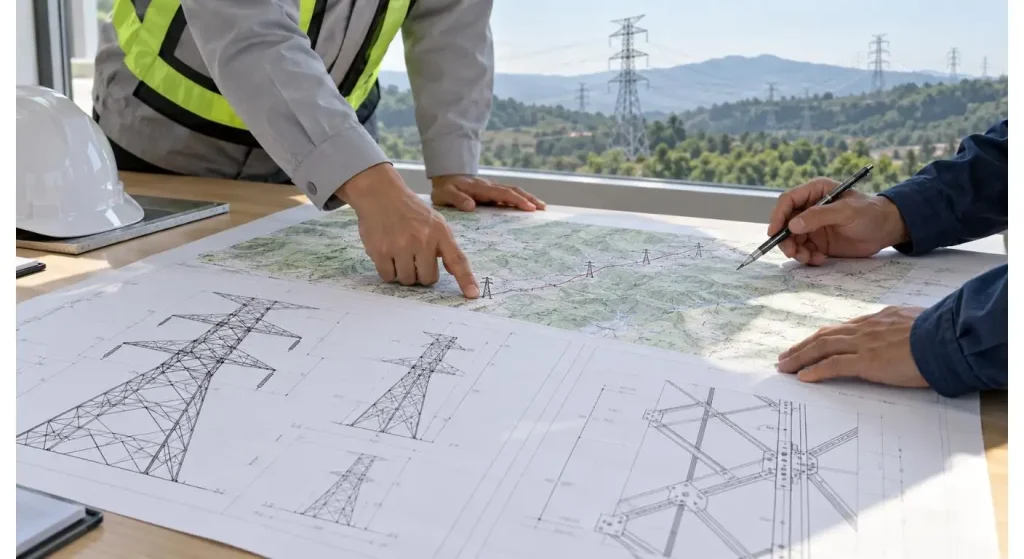
Establish Inspection Hold Points and Inspection required records.
Schedule inspections around those things which are hard to change: material release, initial fabricated pieces, trial assembly (where applicable), coating acceptance, packing. Determine what the buyer will see, what can be checked in the records and what needs to be formally approved prior to work.
| Hold point | Evidence to submit | Release decision |
| Material before fabrication | Approved grade and traceable certificates | Release steel for processing |
| First fabricated members | Dimensional inspection records | Continue production or correct process |
| Trial assembly, if specified | Fit report and deviation closure | Release affected tower type |
| Finished coating | Coating inspection and repair records | Release components for packing |
| Shipment preparation | Bundle list and hardware reconciliation | Release shipment |
Don't request just a final certificate. Ask for evidence of compliance to be provided at every agreed step and specify the form in which this is to be submitted and when. The contract must mention checks and records for this order; X.Y. Tower has an About us page on its website about its fabrication and testing equipment.
Explain Packing and Site Handover.
Ensure member/bundle identification is long-lasting and legible. The packing list should be connected to the type of tower/position, revision and quantities. Provide ways of identifying bolts and small attachments to enable the site team to check for a full erected set.
Specify the Delivery Sequence and Handovers documents. Add in the process for shortage, damage and discrepancy upon receipt. Technically compliant member may not be matched to a tower, causing delay in erection.
Check the Specification
Prior to the final document, choose a sample tower and work through all aspects of the document: design basis, drawings, material grades, connection set, inspection records and packing. Determine if 2 competent readers would agree on what needs to be added and what is acceptable.
Clear up missing values and conflicting references prior to the sending of quotations. This is the final review and now the specification will be easier for the manufacturer to price and easier for the buyer to enforce.
Conclusion
A valuable steel tower technical specification is a string of verifiable choices. It passes on the definition of the project design and controls the project fabrication processes and explains the requirements for evidence for each handover. That means for a high-voltage transmission tower, there is less ambiguity between engineering and factory inspection and acceptance on site.
FAQs
Q1. Is it possible to use a product-page specification instead of a project technical specification?
No. Product pages outline options, the project needs to have their loads, drawings, materials, and acceptance criteria approved.
Q2. Who makes the choice of steel type?
The project engineer responsible for the project should identify it in the design approved. All the approval procedure must be stated for any proposed substitution.
Q3. Why include drawing revision control?
It doesn't allow parts to be made or sent to obsolete drawings. The final product and documentation should be kept in connection to the revision that has been approved.
Q4. Does an inspection certificate suffice?
Usually not. Ask for the agreed documentations of the material, manufacture, coating and assembly to verify the order.
Q5. Which of the following is the packing list supposed to list?
Should link the bundles and hardware to the appropriate tower type/location, quantities and drawing revisions. Provide any erection section details as needed by the project.

Hey, I’m Chunjian Shu
"X.Y. Tower: Reliable, innovative solutions for high-quality towers and electrical equipment with professional service.
