
Telecom Tower Pricing, Quotes & Buying Guide
2025-12-01
Telecom tower pricing typically ranges from $15,000 to over $150,000 for the structure itself, heavily dependent on height, design type, and current global steel prices. A standard 40-meter lattice tower might cost significantly less than a camouflaged monopole of the same height due to design complexity. The final quote is primarily driven by the weight of the steel required to meet your specific wind load and antenna loading requirements. To get an accurate quote, manufacturers need your exact site coordinates, desired height, and the number of antennas you plan to mount.
What Factors Influence Telecom Tower Costs?
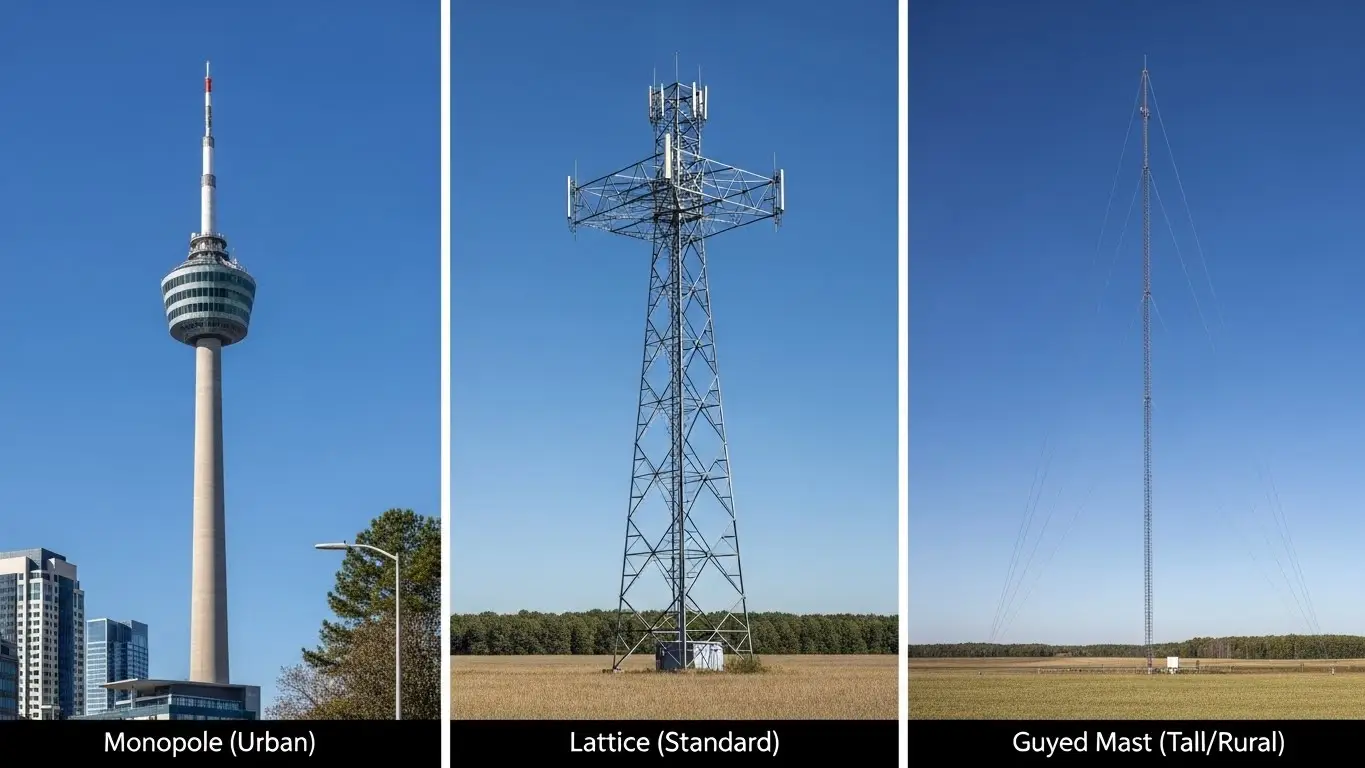
The price of a telecommunication tower is never fixed because each structure is engineered for specific conditions. Understanding these variables will help you evaluate quotes effectively.
1. Steel Weight and Material Grades
Steel is the single largest cost component, often accounting for 60% to 70% of the total manufacturing price. The grade of steel used affects both the strength and the cost. Higher yield strength steel allows for lighter designs but may cost more per ton.
- [Suggested Link: Steel Market Trends]
- Context: It is vital to understand the materials used. You can learn more about how different steel grades and materials affect telecom tower quality to ensure you aren't overpaying for inferior materials.
2. Tower Height and Design Type
As height increases, the base width and steel thickness must increase exponentially to maintain stability, driving up costs.
- Monopoles: Generally more expensive per foot due to heavy steel plate requirements.
- Self-Supporting Lattice Towers: Moderate cost; efficient for heights up to 100m.
- Guyed Masts: The most economical option for extreme heights, as they use less steel but require a large land area for anchor points.
3. Wind Speed and Loading Capacity
A tower built for a 160 km/h wind zone requires much more steel than one built for 100 km/h. Similarly, a tower designed to hold 12 heavy microwave dishes will cost more than one designed for 3 lightweight GSM antennas.
![Image Suggestion: A split image showing a Self-Supporting Lattice Tower vs. a Guyed Mast side-by-side. Alt Text: Comparison of self-supporting lattice tower and guyed mast design structures.]
Which Type of Tower is the Most Cost-Effective?
Guyed towers are generally the most cost-effective option for heights exceeding 60 meters, provided you have the land space available.
Because they rely on guy wires (cables) for stability rather than a massive steel base, they use significantly less steel than self-supporting structures. This reduction in weight directly lowers the manufacturing and shipping costs. However, if your site has a small footprint (like an urban rooftop or small lot), a lattice guyed tower might not be feasible, making a self-supporting lattice tower the smarter financial choice despite the higher material cost.
Cost vs. Footprint Comparison
| Tower Type | Relative Cost | Land Footprint Required | Best Use Case |
| Guyed Mast | Low ($) | Very High (requires anchors) | Rural areas, extreme heights |
| Lattice (Self-Supporting) | Medium ($$) | Medium | Suburban/Rural, heavy loads |
| Monopole | High ($$$) | Low | Urban areas, limited space |
How Do I Get an Accurate Tower Quote?
To receive a precise manufacturing quote rather than a vague estimate, you must provide the manufacturer with a specific "Design Basis."
Prepare the following data before requesting a quote:
- Tower Height: The exact vertical height required.
- Wind Speed: The operational wind speed for the installation site (e.g., 160km/h).
- Antenna Load: How many antennas, at what heights, and their approximate wind surface area.
- Standards: Any specific design code required (e.g., EIA/TIA-222-G or H).
Once this data is submitted, engineers run a simulation to calculate the exact steel weight. Since towers are sold largely by weight, this calculation is the only way to generate a binding price.
![Image Suggestion: An infographic showing the 4 steps of the quoting process: Requirements -> Engineering Design -> Weight Calculation -> Final Price. Alt Text: Telecom tower quoting process flowchart.]
What Are the Hidden Costs in Buying Towers?
Shipping and Galvanization are the two most overlooked costs.
Galvanization
Raw steel cannot survive the elements. Hot-dip galvanization is essential for protecting the tower from rust for 30+ years. This process is usually calculated by weight and added to the final quote. Ensure your quote explicitly includes "Hot-Dip Galvanization to ASTM A123 standards."
Logistics and Shipping
Towers are heavy and bulky. A 60-meter lattice tower might require two or three 40ft shipping containers.
- Nesting: Experienced manufacturers "nest" smaller tower sections inside larger ones to save space.
- Freight: Ocean freight rates fluctuate. Always ask if the quote is FOB (Factory) or CIF (delivered to your port).
- [Suggested Link: Telecom Tower Installation Guide]
Frequently Asked Questions
How long does it take to manufacture a telecom tower?
Typically, manufacturing takes 20 to 45 days after the design drawings are approved. This timeline includes material procurement, fabrication, and galvanization. Custom designs or large orders may take longer.
Can I buy a standard "off-the-shelf" tower?
While some manufacturers keep stock of common designs (like 40m light-duty towers), most telecom towers are "made-to-order." This ensures the structure is safe for the specific wind and soil conditions of your site.
What is the lifespan of a galvanized steel tower?
A properly designed and hot-dip galvanized steel tower typically has a lifespan of 30 to 50 years. In highly corrosive environments (like coastal areas), this might be reduced unless additional paint coatings are applied.
Do quotes usually include installation?
No. Manufacturing quotes usually cover the steel structure, bolts, and climbing accessories. Civil works (foundation) and erection (installation) are typically handled by local contractors, though the manufacturer will provide the foundation design and assembly drawings.
Key Takeaways
- Steel Drives Price: Tower costs are directly tied to the weight of steel; higher wind loads equal heavier, more expensive towers.
- Know Your Site: You cannot get an accurate quote without knowing the wind speed and antenna loading for your specific location.
- Check the Type: Guyed towers are cheapest for height, but lattice towers offer the best balance of cost and footprint for most standard sites.
- Verify Protection: Always ensure the quote includes hot-dip galvanization to protect your investment from corrosion.
Conclusion
Buying a telecom tower is a significant infrastructure investment that requires balancing structural safety with budget. By understanding that price is a function of weight, height, and design, you can ask smarter questions and secure better deals. Always prioritize a manufacturer who is transparent about steel grades and design standards to ensure your tower stands tall for decades.
Ready to get started? Contact our engineering team today with your site specs for a precise, obligation-free quote.

Hey, I’m Chunjian Shu
"X.Y. Tower: Reliable, innovative solutions for high-quality towers and electrical equipment with professional service.
