
Telescopic Unguyed Towers: How They Work and Where They Fit
2025-12-15
Telescopic unguyed towers are retractable, self-supporting masts that extend vertically without requiring external support cables (guy wires). They function by nesting multiple tubular sections inside one another, which are raised using pneumatic pressure, hydraulic rams, or mechanical winches. Because they do not need a wide area for ground anchors, they are the ideal solution for restricted spaces, rapid military deployments, and mobile communication trailers where speed and a small footprint are the top priorities.
How Do Telescopic Unguyed Towers Work?
The engineering magic of a telescopic tower lies in its ability to transform from a compact, retracted package into a tall vertical structure in minutes. Without guy wires to hold it steady, the tower relies entirely on the strength of its individual sections and the stability of its base.
There are two primary mechanisms used to elevate these structures:
1. Pneumatic Systems (Air Pressure)
These are the most common for lightweight to medium-duty applications. An air compressor pumps air into the base of the mast. Sealed collars between the sections force the inner tubes upward, locking them in place with air pressure or mechanical locking collars. They are clean, fast, and smooth.
2. Mechanical/Winched Systems
For heavier payloads, mechanical versions use a system of internal steel cables and pulleys connected to a central winch. When the winch turns, it pulls the sections up simultaneously. These are preferred when the tower needs to hold heavy equipment for long periods without the risk of air leaks.
What are the advantages of an unguyed tower?
The primary advantage is the ultra-small footprint; since there are no guy wires extending outward, the tower only occupies the space of its base.
This "zero-footprint" capability makes them essential for:
- Urban Deployments: Setting up in a single parking spot or on a sidewalk.
- Safety: Removing the trip hazard of steel cables in crowded event spaces.
- Speed: Eliminating the time-consuming step of driving ground stakes and tensioning wires.
However, designing these systems requires precision. Because they lack lateral support, the manufacturing tolerance must be incredibly tight to prevent "slop" or swaying. For a look at how these precise tolerances are achieved, check out our custom mast tower manufacture guide.
How high can a telescopic tower go without guy wires?
Most unguyed telescopic towers are designed to reach heights between 10 meters (33 ft) and 30 meters (100 ft). Going beyond this height without support cables becomes exponentially difficult and expensive due to physics.
As the tower gets taller, the base section must get wider and heavier to resist the wind leverage (overturning moment). A 20-meter unguyed mast might handle a heavy surveillance camera easily, but a 40-meter mast would need a massive, heavy truck chassis to keep it from tipping over.
Height vs. Stability Trade-off:
| Feature | Low Height (10-15m) | Medium Height (20-30m) | High Height (30m+) |
| Unguyed Stability | Excellent | Good | Poor (Usually requires guys) |
| Payload Capacity | High (50kg+) | Medium (30kg) | Low (Light sensors only) |
| Wind Resistance | High | Moderate | Low (Must retract in wind) |
Are telescopic towers safe in high winds?
Yes, but they have lower wind limits than guyed towers. Most unguyed telescopic masts are rated for operational winds of 35-50 mph (60-80 km/h) and survival winds of 60-80 mph when fully extended.
Safety in high winds relies on "retraction protocols." Unlike a permanent fixed tower, a telescopic tower is designed to be lowered when the weather gets rough. Modern systems come with anemometers (wind speed sensors) that automatically retract the mast to a safe nested height if wind gusts exceed the safety rating.
Where Do They Fit? Key Applications
Because of their mobility, these towers fit into niches where permanent infrastructure is impossible.
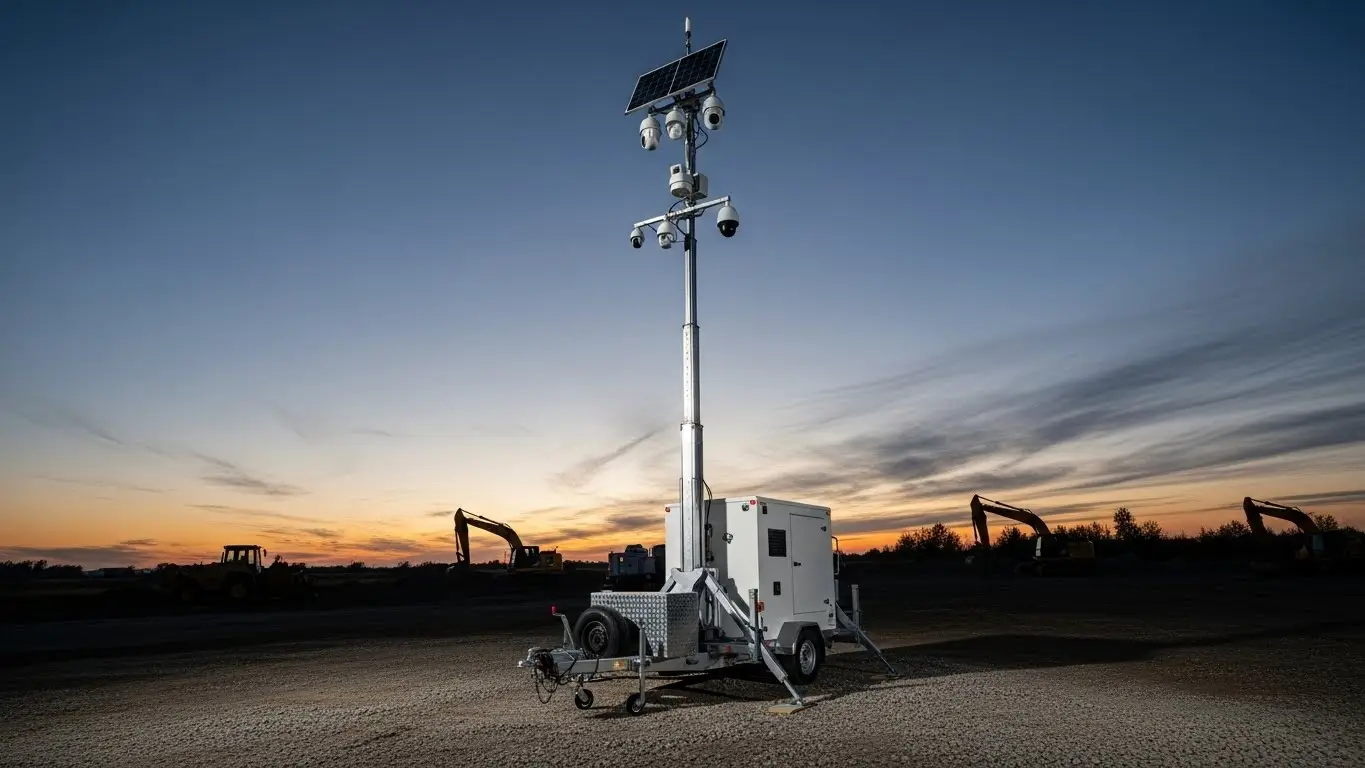
1. Mobile Surveillance (CCTV)
Security companies mount these on small solar trailers to monitor construction sites or parking lots. The lack of guy wires means thieves or vandals cannot easily cut a cable to drop the tower.
2. Emergency Comms (COWs)
Cell on Wheels (COWs) use heavy-duty unguyed masts to restore cellular service after hurricanes. They can drive into a disaster zone and raise the antenna in 15 minutes. [SUGGESTED LINK: Mobile Communication Towers for Emergency Response]
3. Military & Tactical
In the field, soldiers need to raise radio antennas quickly without spending an hour hammering stakes into frozen or rocky ground. The unguyed mast allows for "shoot and scoot" operations.
Selecting the Right Telescopic Mast
When ordering a mast, you aren't just buying height; you are buying "head load" capacity. You must calculate the total weight and surface area of the equipment you plan to mount on top.
- Nested Height: How short does it need to be when driving? (To fit under bridges).
- Extended Height: How high do you need to go?
- Payload: Can it lift your 50lb microwave dish?
If you are looking for specialized materials or custom locking mechanisms, referencing a custom mast tower manufacture guide is the best place to start understanding your options.
Frequently Asked Questions
Yes. Most manufacturers add "guy collars" or eyelets to the top sections. Adding guys significantly increases the stability and wind rating, allowing the tower to stay extended in severe storms where an unguyed mast would need to be retracted.
They require regular cleaning of the tube sections to remove dust and grit that can damage the seals. You must also check the air compressor filters and lubricate the mast periodically with the manufacturer's recommended oil.
Aluminum is lighter and rust-resistant, making it better for smaller, vehicle-mounted applications. Steel is much heavier and stiffer, making it the superior choice for large trailer-mounted towers that carry heavy loads.
A pneumatic mast can reach full height in 2 to 5 minutes. A mechanical winch system is generally slower, taking 10 to 15 minutes depending on the gearing ratio.
Yes. High-quality masts feature "locking collars" that mechanically pin the sections in place. This allows you to turn off the air pressure or take the load off the winch cable for long-term deployments.
Key Takeaways
- Zero Footprint: Unguyed towers require no ground space beyond the base vehicle or trailer.
- Rapid Deployment: They can be fully operational in minutes, ideal for emergencies.
- Height Limits: Generally capped at 30 meters for stability; taller needs require guy wires.
- Auto-Retraction: Safety depends on lowering the mast during high wind events.
Conclusion
Telescopic unguyed towers are the ultimate problem solvers for temporary height. While they may not reach the soaring altitudes of permanent lattice towers, their ability to deliver connectivity, light, and surveillance anywhere a truck can drive makes them indispensable. By understanding their payload and wind limits, you can deploy them safely and effectively in the most challenging environments.
Ready to build your mobile solution? Explore our custom mast tower manufacture guide to design the perfect telescopic system for your mission.

Hey, I’m Chunjian Shu
"X.Y. Tower: Reliable, innovative solutions for high-quality towers and electrical equipment with professional service.
