
What Are the Key Benefits and Use Cases of Lattice Steel Towers?
2025-12-10
Lattice steel towers are freestanding structural frameworks typically made from galvanized steel sections bolted or welded together in a crisscross pattern. They are the backbone of modern infrastructure, primarily used for high-voltage power transmission and telecommunications. Their primary advantage lies in their high strength-to-weight ratio; because the open lattice design allows wind to pass through easily, they experience significantly less wind load than solid structures. This makes them cost-effective and incredibly durable for supporting heavy electrical conductors or communication antennas over long distances and at great heights.
What Exactly Is a Lattice Steel Tower?
A lattice steel tower is a skeletal structure constructed from steel profiles (angles, tubes, or solid rounds) arranged in a triangular or square base pattern. This geometric design provides exceptional rigidity and stability while using less material than solid poles.
These towers are engineered to withstand extreme environmental forces. The steel is almost always hot-dip galvanized, a process that coats the metal in zinc to prevent rust and corrosion, ensuring a service life that can exceed 50 years even in harsh climates.
Types of Lattice Structures
While the self-supporting four-legged tower is the most common, variations exist for specific needs. For instance, lattice guyed towers use tensioned cables (guy wires) for stability, allowing them to reach distinctively higher elevations with a lighter central column.
Why Are Lattice Towers Preferred for Transmission Lines?
Why do we use lattice towers instead of concrete poles?
Lattice towers are preferred for high-voltage transmission (above 110kV) because they can support heavier loads and span longer distances between towers.
Concrete or wood poles are limited in height and strength. In contrast, lattice steel towers offer:
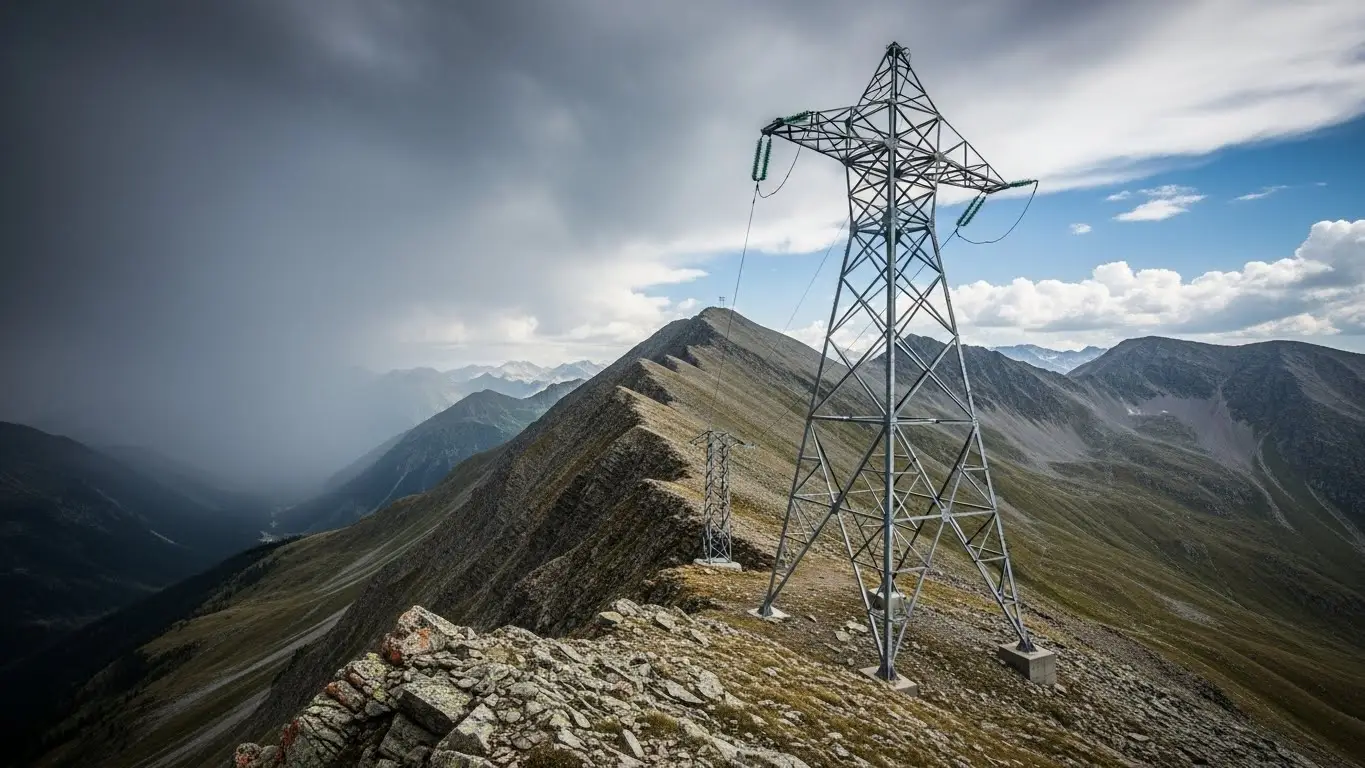
- Modular Assembly: The components can be transported to remote locations in bundles and assembled on-site. This is crucial for mountainous or inaccessible terrain where transporting a massive, pre-cast concrete pole is impossible.
- Adaptability: Engineers can easily modify the design to accommodate different terrain or line angles by adjusting the leg extensions or cross-arm configurations.
- Electrical Clearance: Their height ensures safe vertical clearance between the high-voltage conductors and the ground, trees, or buildings.
Key Benefits of Lattice Steel Towers
1. Superior Strength-to-Weight Ratio
The truss design distributes weight and stress efficiently. This means you get a structure capable of holding massive vertical and horizontal loads without the massive weight of a solid tube.
2. Low Wind Load
One of the biggest enemies of tall structures is wind. The "open" nature of the lattice design significantly reduces the surface area exposed to wind. This transparency allows air to flow through the structure rather than pushing against it, reducing the overturning moment and foundation requirements.
3. Cost-Effectiveness
While the fabrication requires precision, the material costs are often lower for the height achieved compared to monopoles. Additionally, the lighter weight reduces transportation costs and allows for lighter, less expensive foundations in many soil conditions.
Comparison: Lattice Towers vs. Monopoles
To help you decide which structure suits your project, here is a comparison of the two most common tower types.
| Feature | Lattice Steel Tower | Steel Monopole |
| Footprint | Larger (requires more land area) | Small (ideal for urban areas) |
| Wind Resistance | Excellent (low wind load) | Moderate (high wind load) |
| Assembly | On-site assembly (labor intensive) | Pre-assembled sections (crane intensive) |
| Aesthetics | Industrial / Utilitarian | Sleek / Less obtrusive |
| Maximum Height | Very High | Limited |
Common Use Cases and Applications
High-Voltage Power Transmission
This is the most visible use case. Lattice towers carry the heavy aluminum conductors that transport electricity from power plants to substations. They are essential for 132kV, 220kV, 400kV, and higher voltage lines.
Telecommunications and Broadcasting
Because they can be built to extreme heights, lattice towers are ideal for:
- Microwave links: Requiring direct line-of-sight over long distances.
- Radio and TV broadcasting: requiring massive heavy antennas.
- Mobile networks: Acting as base stations for cellular coverage in rural areas.
Wind Energy and Monitoring
The wind industry uses lattice towers for meteorological measurement masts (met towers) to measure wind speeds at hub height before building a wind farm.
How Long Do Lattice Steel Towers Last?
What is the lifespan of a galvanized steel tower?
A properly maintained, hot-dip galvanized lattice steel tower can last between 40 to 80 years.
The longevity depends heavily on the environment. In dry, rural areas, the zinc coating degrades very slowly. In coastal or heavy industrial areas, the lifespan may be shorter without additional maintenance. However, individual steel members can be replaced without taking down the entire tower—a major maintenance advantage over concrete or monopole structures.
Frequently Asked Questions
Q: Can lattice towers be used in residential areas?
A: Yes, but they are less common due to their large footprint and industrial appearance. Monopoles are generally preferred in dense urban or residential zones for aesthetic reasons.
Q: Are lattice towers harder to install than monopoles?
A: They take longer to assemble because they consist of many bolted parts. However, they are often easier to transport to sites where heavy cranes and long trucks cannot access.
Q: What maintenance do lattice towers require?
A: Regular inspections are needed to check for loose bolts, structural deformation, and rust. If the galvanization wears thin, the tower may need to be painted with a protective coating.
Q: Why are lattice towers triangular or square?
A: Three-legged (triangular) towers use less steel and are cheaper, making them popular for telecom. Four-legged (square) towers offer higher structural stability and are the standard for heavy power transmission.
Key Takeaways
- Efficiency: Lattice towers offer the best strength-to-weight ratio for tall structures.
- Wind Resistance: The open design minimizes wind load, enhancing stability during storms.
- Versatility: Ideal for difficult terrains where transporting large, pre-made sections is impossible.
- Longevity: With hot-dip galvanization, these structures can serve for over 50 years.
Conclusion
Lattice steel towers remain the industry standard for reliable energy transmission and telecommunications infrastructure. Their ability to combine low material weight with high structural integrity makes them the most practical choice for long-span and high-load applications. Whether you are planning a transmission line across a mountain range or a rural telecom network, the lattice design offers a proven, durable solution.
Ready to explore specific tower designs for your project? Contact our engineering team today to discuss your load requirements and site conditions.

Hey, I’m Chunjian Shu
"X.Y. Tower: Reliable, innovative solutions for high-quality towers and electrical equipment with professional service.
