
Amateur Radio Towers for Reliable HAM Communication
2026-02-24
Amateur radio towers are also specially designed antenna support towers that are sufficient to support the requirements of HAM radio operators. Such telescopic tower systems offer the height, the strength and the flexibility that is needed in the HF, VHF and UHF communication. They are weight efficient, crank-up and lightweight aluminum designed and can be used in installing radios both as a permanent and temporary solution.
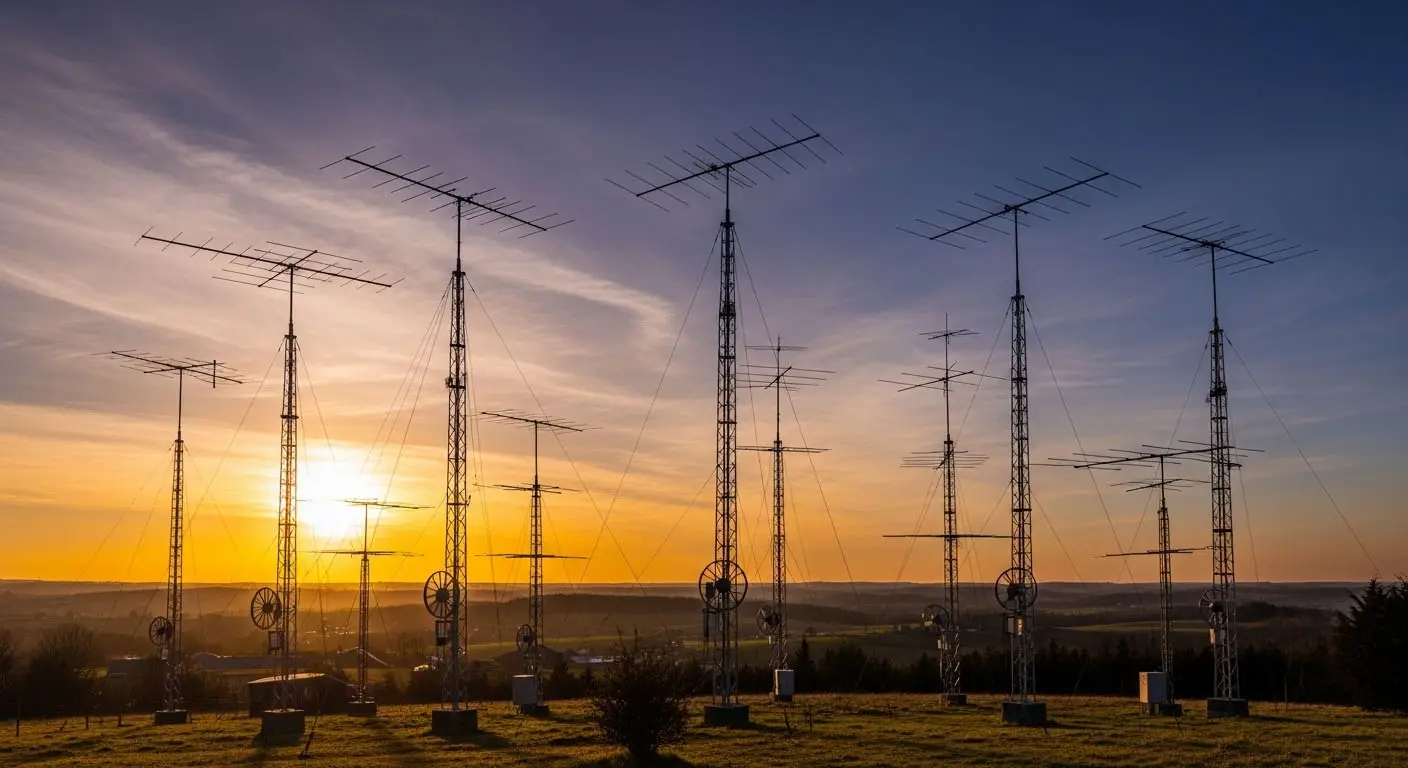
Modern amateur radio towers are engineered to be durable and user friendly and this aids the operators, who also strive to be able to get greater signal coverage, better antenna gain, and reliable long-range communication.
Telescopic Tower Design
These HAM radio towers have a multi-section telescoping design whereby the tower extends vertically in height but without structural instability. The towers are available in a two-, three-, or four-section configuration, with a height of around 30 to 100 feet according to the models.
Each of the sections is raised and lowered simultaneously by a stainless steel cable/pulley system in order to have a smooth and controlled rise and fall of the tower.
This architecture enables the operators to raise the height of the antenna safely without having to climb up the structure.
High-Strength Aluminum Construction
The towers are manufactured from extruded 6061-T6 aluminum tubing, providing an excellent strength-to-weight ratio.
Key material benefits:
-
Lightweight for easier handling
-
Strong structural performance
-
Natural corrosion resistance
-
Reduced maintenance requirements
Compared with traditional steel towers, aluminum designs can deliver similar payload capability while weighing significantly less, improving portability and installation efficiency.
Standard Features
Each amateur radio tower package typically includes a comprehensive set of built-in features to support safe and reliable operation.
Tilt Base System
Towers are equipped with either an H-type hinge base or T-type tilt base, allowing the structure to be safely lowered to ground level for maintenance or antenna installation.
Building Brackets
Engineered brackets provide approximately six inches of standoff for secure attachment to structures such as houses, barns, or sheds when required.
Hand-Crank Winch
A zinc-plated worm gear winch enables controlled tower raising and lowering. Optional AC or DC electric winches are available for powered operation.
Safety Stop Latch
The integrated safety latch removes tension from cables and prevents unintended tower retraction during operation.
Aluminum Mast and Hardware
Packages include aluminum masts for antenna mounting along with stainless steel rigging, cables, and pulleys.
Duty Class Options
Amateur radio towers are offered in multiple duty ratings to match different antenna sizes and wind conditions.
Standard Duty (HN Series)
Designed for typical amateur installations.
Typical performance:
-
Up to 125 lb payload
-
Up to 18 sq ft antenna wind load
-
Tested to 70 mph wind speeds
These models support common beam antennas and rotator systems used by HAM operators.
Extra Heavy-Duty (XHD Series)
Built for larger antennas and higher mechanical demands.
Typical performance:
-
Up to 200 lb payload
-
Up to 23 sq ft wind load
-
Tested to 70 mph
These towers include reinforced masts and structural components for enhanced strength.
Extra-Extra Heavy-Duty (XXHD Series)
Designed for multi-antenna or high-load configurations.
Typical performance:
-
Up to 275 lb payload
-
Up to 25 sq ft wind load
-
Tested to 70 mph
This class supports heavy rotators and complex antenna arrays.
Flexible Mounting Solutions
Amateur radio towers support several installation methods to match site conditions.
Direct Ground Mount (MP-2)
This mounting pole system allows installation without a concrete foundation. It requires only a deep hole filled with compacted soil and gravel, simplifying field deployment.
The MP-2 includes a top pivot that enables tilting the tower from vertical to horizontal, eliminating the need for climbers.
Independent Base
The independent base option allows mounting on an existing concrete pad while still enabling tilt-down capability for maintenance access.
Mobile Trailer Systems
For portable operations, compatible trailer tower systems provide rapid deployment for field work, emergency communications, or temporary events.
Typical Applications
Amateur radio towers are widely used across communication and hobbyist environments.
Common use cases include:
-
HAM radio stations
-
HF/VHF/UHF antenna systems
-
Emergency communications
-
Field day operations
-
Remote or mountain-top installations
-
Experimental radio setups
HAM radio communities often rely on these towers during emergencies when traditional networks become congested or unavailable.
Why Choose an Aluminum Crank-Up Tower?
Operators prefer crank-up aluminum towers for several practical reasons:
-
Adjustable antenna height
-
Reduced climbing requirements
-
Lightweight transport
-
Corrosion-resistant construction
-
Compact nested storage
-
Fast deployment
The telescoping design allows sections to retract inside one another, improving portability and enabling access to locations that fixed steel towers may not reach.
Conclusion
The use of amateur radio towers offers a stable as well as versatile solution to the HAM operators in terms of antenna elevation and communication over distance. These towers are made of aluminum telescopically, have various classes of duties, and can be used in various mounting systems, all of which are helping in home radio setups up to an emergency field setup.
A crank-up tower, whether permanently mounted or used as a portable tower, is a well-designed tower that will promote better signal, increase safety and provide reliable communication capability to the serious amateur radio user.

Hey, I’m Chunjian Shu
"X.Y. Tower: Reliable, innovative solutions for high-quality towers and electrical equipment with professional service.
