
How Do Telecommunication Towers Work?
2026-02-24
Modern wireless networks are typified by telecommunication towers. They allow mobile phones, tablets, connected devices to communicate with each other over a long distance without the use of physical cables. Users are dependent on a huge network of towers operating in the background whether making calls, sending messages or browsing the internet.
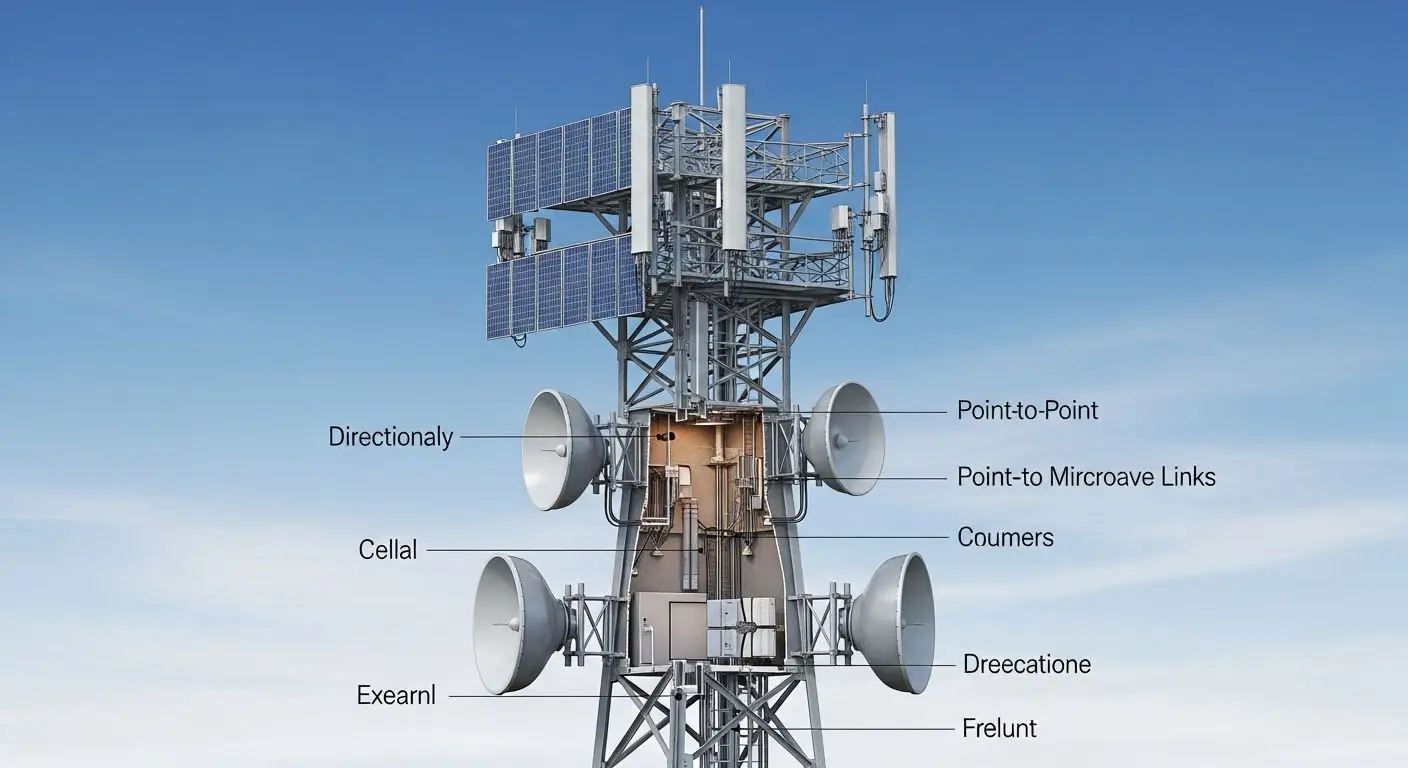
The knowledge of the working of telecommunication towers assists businesses, telecommunication operators, and infrastructure planners to come up with improved network coverage. The guide provides an explanation of the working principle, main components, and working process of the telecom towers in the digital world today.
What Is a Telecommunication Tower?
A cell tower or telecommunication tower is a tall tower, which holds antennas and wireless communication devices. It is primarily used to send and receive radio messages which couple mobile devices to the wider telecom network.
Such towers create a grid of coverage areas called cells. The devices switch among the towers they can see as users move their devices keeping them constantly connected.
Large-scale mobile communication could not be achieved without telecom towers.
Core Components of a Telecommunication Tower
A telecom tower is more than just a steel structure. It supports several critical systems that work together.
Antenna Systems
Antennas are the most visible part of the tower. Their role is to send and receive radio frequency (RF) signals within the coverage area. Common types include:
-
Panel antennas for sector coverage
-
Microwave dish antennas for point-to-point links
-
Omnidirectional antennas for broad coverage
Proper antenna placement ensures optimal signal strength and minimal interference.
Transceivers (Radio Units)
When antennas capture radio waves from mobile devices, the transceiver converts those waves into electrical signals for processing. It also converts outgoing electrical signals back into radio waves for transmission.
This two-way conversion is what enables voice calls, texts, and mobile data.
Base Transceiver Station (BTS)
The BTS or radio base station is the main communication hub at the tower site. It manages wireless links between user devices and the telecom network.
Key BTS functions include:
-
Signal processing
-
Frequency management
-
Network coordination
-
Encryption and decoding
The BTS ensures efficient and secure wireless communication.
Backhaul Connection
After signals are processed at the tower, they must travel to the core network. This happens through the backhaul system, which typically uses:
-
Fiber optic cables
-
Microwave radio links
Backhaul connects the tower to switching centers and the internet backbone.
Power Supply and Backup
Reliable power is essential for continuous operation. Telecom towers typically include:
-
Main grid power
-
Battery backup systems
-
Diesel generators
These systems keep the tower running during outages.
Step-by-Step: How Telecommunication Towers Work
Understanding the workflow makes the system easier to visualize.
Step 1: Device Sends Radio Signal
When you make a call or use mobile data, your phone converts digital information into radio waves and transmits them to the nearest tower.
Because towers are strategically placed, each one covers a defined geographic cell.
Step 2: Antenna Receives the Signal
The tower’s antenna captures the incoming radio signal from your device. Signal strength depends on factors such as:
-
Distance from the tower
-
Terrain
-
Frequency band
-
Antenna height
Step 3: Transceiver Processes the Signal
The transceiver converts the radio signal into electrical data and forwards it to the base station equipment for routing and processing.
Step 4: Signal Travels Through Backhaul
The processed data moves through fiber or microwave backhaul to the mobile operator’s core network, where it is routed to the destination (another phone, server, or internet service).
Step 5: Network Sends Response Back
The process reverses when data returns to the user. The tower transmits radio signals back to the mobile device via the antenna.
This entire cycle happens in milliseconds.
How Towers Create Cellular Coverage
Telecommunication networks divide large regions into smaller coverage zones called cells. Each tower serves one or more cells using assigned radio frequencies.
This cellular structure provides two major advantages:
-
Efficient frequency reuse
-
Wide geographic coverage
As users move between cells, the network performs a “handoff,” automatically transferring the connection to the next tower without interrupting service.
This is why you can stay on a call while traveling.
Types of Telecommunication Towers
Different environments require different tower structures.
Monopole Towers
-
Single tubular pole
-
Small footprint
-
Suitable for urban areas
-
Faster installation
Lattice Towers
-
Steel framework design
-
High strength
-
Cost-effective for tall structures
-
Common in rural deployments
Guyed Towers
-
Supported by tensioned cables
-
Lower material cost
-
Require larger ground area
Rooftop Towers
-
Installed on buildings
-
Ideal for dense cities
-
Improve urban coverage
Selecting the right type depends on terrain, zoning, and network requirements.
Factors That Affect Tower Performance
Several variables influence how well a telecom tower works.
Key factors include:
-
Antenna height
-
Transmission power
-
Frequency band
-
Surrounding obstacles
-
Network density
-
Weather conditions
Lower frequencies generally travel farther, while higher frequencies (such as 5G) provide higher data capacity but shorter range.
Importance of Telecommunication Towers
Telecom towers are essential infrastructure for modern society.
Enabling Mobile Connectivity
They support voice calls, messaging, and mobile internet access across wide areas.
Supporting Emergency Communications
Cell networks handle a large volume of emergency calls, making tower reliability critical for public safety.
Expanding Rural Coverage
Strategically placed towers extend connectivity to remote regions, helping bridge the digital divide.
Powering 4G and 5G Networks
Next-generation networks rely on dense tower deployment and advanced radio equipment to deliver high-speed data services.
Future Trends in Telecom Towers
The telecom sector continues to evolve rapidly. Key trends include:
-
5G small-cell deployment
-
Smart tower monitoring
-
Energy-efficient power systems
-
Multi-tenant tower sharing
-
Edge computing integration
As data demand grows, tower infrastructure will become even more critical.
Conclusion
Telecommunication towers operate through the transmission and reception of radio signals between cellular devices and the backbone net. These structures provide end-to-end wireless communication over large territories through the use of a coordinated network of antennas, transceivers, base stations and backhaul links.
Telecom towers are the foundation of the modern world of connectivity, whether it is urban 5G networks or rural coverage expansion. Making sense out of how they work can make network planners and infrastructure developers create communication systems that are more reliable and efficient in the future.

Hey, I’m Chunjian Shu
"X.Y. Tower: Reliable, innovative solutions for high-quality towers and electrical equipment with professional service.
