
What Is a Lattice Tower? Structure, Types, and Key Uses
2026-02-20
A lattice tower is a steel framework structure built from interconnected metal sections that form a rigid, open-frame design. Engineers use this tower type to support power transmission lines, telecom antennas, and other elevated equipment that requires strength combined with reduced wind resistance. Because of its triangular bracing pattern, a lattice tower provides high load capacity while using less material than solid structures.
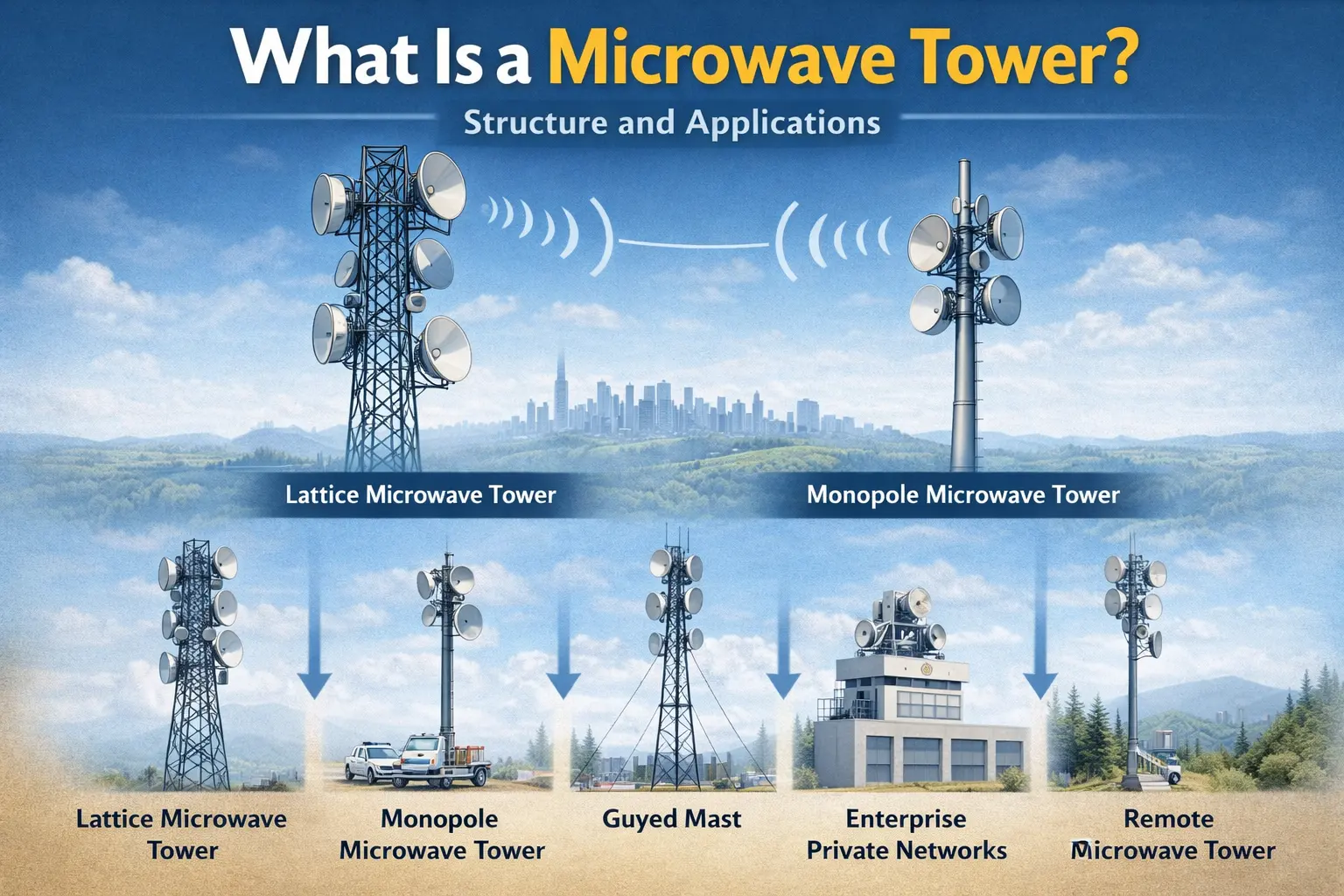
Lattice towers are widely used in electrical grids, wireless networks, and infrastructure projects where height, stability, and long service life are essential.
Basic Structure of a Lattice Tower
A lattice tower consists of multiple steel angle members bolted or welded together into a truss-like framework. The open design distributes loads efficiently and allows wind to pass through the structure, which reduces overall stress.
Key structural elements include:
-
Main legs that carry vertical loads
-
Bracing members that provide lateral stability
-
Horizontal cross arms for mounting conductors or antennas
-
Base plates and foundation bolts for anchoring
-
Climbing facilities for maintenance access
Most lattice towers are manufactured from hot-dip galvanized steel to improve corrosion resistance and extend service life in outdoor environments.
How a Lattice Tower Works
A lattice tower works by transferring loads through its triangulated framework down to the foundation. The triangular geometry prevents deformation and improves structural efficiency.
When supporting transmission lines or antennas, the tower must handle several forces:
-
Vertical load from equipment and cables
-
Wind pressure on the structure and mounted devices
-
Ice loading in cold regions
-
Tension from conductors or guy wires
Because the load distributes across many connected members, lattice towers can achieve very high heights while maintaining structural stability.
Common Types of Lattice Towers
Different industries use specific lattice tower configurations depending on project requirements.
Self-Supporting Lattice Tower
This is the most common design. The tower stands independently without guy wires and typically has a square or triangular base. It is widely used for transmission lines and telecom applications where land space is limited.
Guyed Lattice Tower
A guyed version uses tensioned cables anchored to the ground for additional support. This allows for taller structures with less steel weight. However, it requires more land area for the guy wire layout.
Transmission Line Lattice Tower
These towers are designed specifically for high-voltage power lines. They include long cross arms and strong load capacity to handle conductor tension and environmental loads.
Telecom Lattice Tower
Telecom versions are optimized for mounting microwave dishes and cellular antennas. They often include platforms, ladder systems, and cable management features.
Major Applications of Lattice Towers
Lattice towers serve many sectors because of their strength and height capability.
Power transmission networks
High-voltage lines rely heavily on lattice towers to carry conductors across long distances. Their strength and durability make them suitable for national grid infrastructure.
Telecommunication networks
Wireless operators use lattice towers to mount antennas, microwave dishes, and broadcast equipment.
Broadcast and radar systems
Radio, television, and radar installations use lattice towers for elevated signal coverage.
Industrial and infrastructure projects
Some heavy industrial sites use lattice structures for lighting, monitoring equipment, or specialized support systems.
Advantages of Lattice Tower Design
Lattice towers remain popular because they provide several practical benefits.
-
High strength-to-weight ratio
-
Good wind resistance due to open structure
-
Cost-effective for tall installations
-
Flexible for different load requirements
-
Long service life with galvanizing protection
These advantages make lattice towers a preferred choice for many large-scale outdoor installations.
Key Design Considerations
Selecting the right lattice tower requires careful engineering review.
Height and load capacity
Engineers must calculate antenna weight, conductor tension, and environmental loads.
Wind and ice conditions
Regional climate affects member sizing and bracing design.
Foundation requirements
Soil conditions determine foundation depth and anchor design.
Corrosion protection
Hot-dip galvanizing is commonly specified for long-term durability.
Installation logistics
Transportation, site access, and erection methods must be planned in advance.
Proper design ensures safe operation over decades of service.
Future Trends in Lattice Tower Engineering
Although newer monopole designs are gaining popularity in urban areas, lattice towers continue to dominate heavy-duty and ultra-high applications. Modern developments include:
-
High-strength steel to reduce weight
-
Modular prefabricated sections
-
Improved galvanizing processes
-
Digital structural analysis tools
-
Integration with smart monitoring systems
As global demand for power transmission and wireless connectivity grows, lattice towers will remain a core infrastructure component.
Conclusion
A lattice tower is a durable open-frame steel structure designed to support electrical, telecom, and broadcast equipment at height. Its triangulated design delivers excellent strength, wind resistance, and material efficiency. From high-voltage transmission lines to wireless communication networks, lattice towers continue to provide reliable performance in demanding outdoor environments.
Understanding the structure, types, and applications of lattice towers helps engineers and project planners choose the right solution for long-term infrastructure success.

Hey, I’m Chunjian Shu
"X.Y. Tower: Reliable, innovative solutions for high-quality towers and electrical equipment with professional service.
