
Angle Steel Transmission Tower: A Practical Selection Guide for Power Projects
2026-09-14
An angle steel transmission tower appears to be a simple lattice frame structure, but there are hundreds of linking design considerations to ensure its performance. The final configuration is influenced by factors such as tower function, conductor loads, line angle, wind, ice, and terrain/corrosion exposure.
Choosing a tower therefore is not a matter of picking the height or voltage rating of the tower for utilities and EPC contractors. The structure should be the same as that of the entire line condition and should also be manufacturer-friendly, transportable and erectable.
Angle Steel Transmission Tower is What?
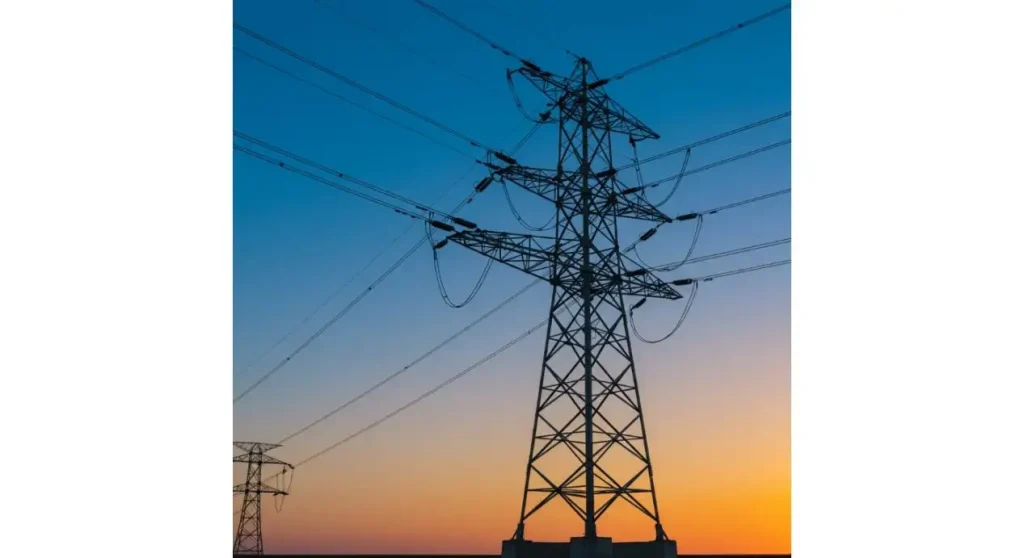
Angle steel transmission tower is a self-supporting lattice tower which is composed of L shape steel members, plates and bolts. It has a triangular structure which disperses conductor, wind and structural loads to the tower body to the foundation.
In contrast to a steel monopole, the tower consists of a large number of rather small members. They can be pre-fabricated, bundled and sent by transport and is therefore a good option for remote areas and locations where it would be hard to move the complete lattice tower.
XY Tower's transmission steel towers can be tailored to meet the requirements for voltage level, tower height, conductor configuration and environmental loads.
Why Angle Steel is used for Transmission Towers?
Angle sections offer good strength to weight ratio and also are highly efficient to manufacture. They have an L-shaped profile which is easy to cut, punch, mark and connect and their lattice profile ensures that many members are either predominantly under tension or compression.
Due to the open structure, there is less wind resistance than with a solid structure of the same size. The individual members can be standardised throughout a tower family, this makes production easier and helps in controlling the project cost.
One of the other handy things about it is maintenance. Bolts can be checked one at a time and in some cases, a damaged secondary member can be replaced without removing a section of tower. However, the ultimate design must still consider buckling, connection strength and load combinations as well as just the weight of the materials.
Which Tower Function is Which?
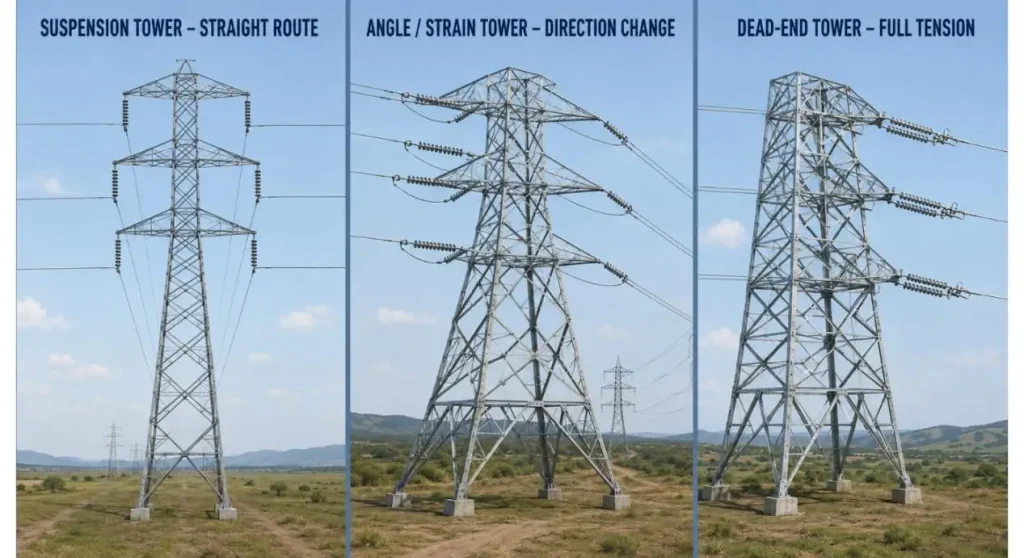
Very few times will a transmission route employ a single tower configuration for the entire route. Conductors on relatively straight lines are usually supported by single towers that are either tangential or suspension and are subjected to primarily vertical and transverse loads. The load on the suspension tower is lower since under normal conditions, the conductor has a low load in the longitudinal direction.In addition to normal operational loads, the suspension tower must also be checked for longitudinal load combinations such as conductor/ground wire breakage accidents.
Longitudinal forces are greater at angle, tension and terminal locations. A strain tower is a tower that is designed to take care of conductor tension as a change in route or an elevation change occurs or at important section points. Dead-end towers are provided at the end of the line or where the tension required from the conductors needs to be isolated.Tension towers are categorized into straight-line tension towers and angle tension towers, with terminal towers being a subclass of tension towers.
The wise selection of function at each tower point not only prevents the waste of steel, but also guarantees that important points have enough structural capacity.
What Project Condition(s) Inform the Design?
An angle steel tower can't be determined by voltage alone. The engineer will also require conductor and earth-wire specifications, the circuit arrangement, span length, line deviation, insulator configuration and required electrical clearances.
But site conditions are also crucial. Tower loading is dependent upon basic wind speed, ice thickness, temperature range, altitude, seismic requirements and terrain. Non-standard leg extensions may be needed while running a mountainous route, or cross-arm geometry/tower height may need to be adjusted due to limited clearance.
The reactions of foundations have to be coordinated with the geotechnical design. The term “economy” does not necessarily imply a structurally efficient tower design if the tower generates too much uplift or compression forces at the foundation.
Instead of each structure being a standalone product, professional tower design services are required to take all these electrical, structural and site requirements and transform them into a tower family that can be built.
What about the Materials and Galvanizing and their Impact on Service Life?
The selection of the steel grade should be based on the member forces, the size of sections available, standards and requirements of local member fabrication practice. Although higher strength steel can be used to decrease the size of heavily loaded members, it should not be used throughout the structure, unless specified.According to Chinese GB/T2694 and DL/T5154, Q235B and Q355B are commonly used steel materials for transmission angle steel towers; High strength steel Q420 and Q460 are used for heavy-duty components,Steel for low-temperature environmental components should meet the impact toughness index at the corresponding temperature
Transmission towers are standing outside for decades so it is critical to ensure that the towers are corrosion protected. Angles, plates, bolts, edges and drilled holes need to be sufficiently covered by the hot dip galvanizing. The consistency of the galvanized finish is also affected by drainage, venting and detailing of members.
Instead of a request for a “galvanized tower,” the buyer should specify the corrosion category and level of required coating in the technical specification for the tower, particularly for coastal, industrial or highly humid conditions.
What are the things that should be checked during the manufacture?
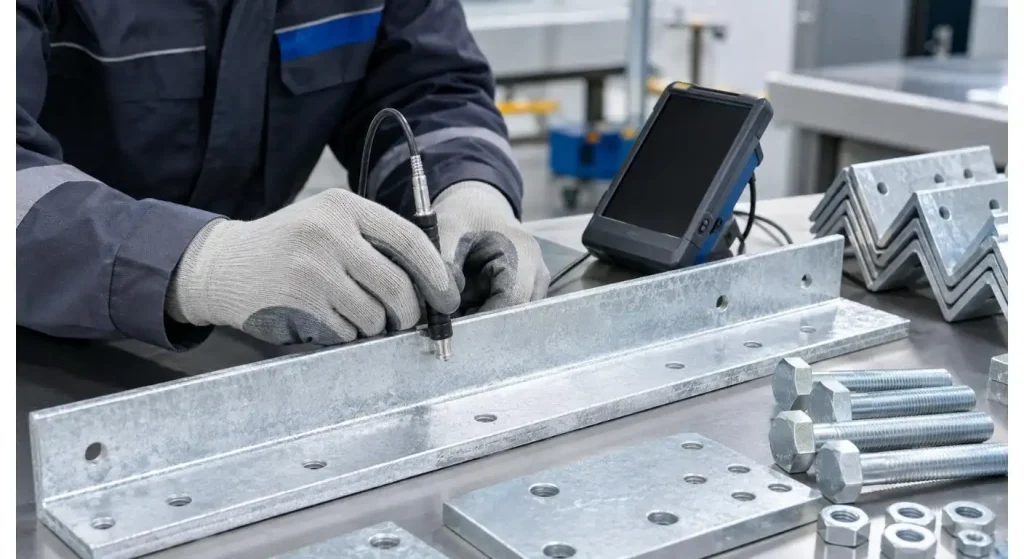
Quality control begins with the traceable raw material, NOT at the end of the tower. Material certificates should be matched with the specified steel grade and the important size should be checked after cutting and punching.
The construction of a prototype is particularly useful for a novel tower design. Identifies mismatched holes, member interference and orientation and marking problems before mass production. The thickness of the galvanizing, the compatibility of the bolts, the quality of the welding (where relevant) and the packaging and identification of the parts should also be checked.
When loading the project site, erection marks and packing lists are set out clearly, tower by tower, to help minimize sorting errors. In the case of export packaging, the galvanized surface should also be safeguarded against multiple handling and sea transport.
What are Buyers looking for in Tower Suppliers?
One method of determining a tower package's performance is by its price per ton but it isn't a good indicator. Some of the criteria buyers should look at include design responsibility, project experience, engineering software, material traceability, prototype ability, galvanizing control, production capacity and documentation.
The supplier should be able to describe the process of how the design loads are broken down into shop drawings and how revision is managed throughout the production process. It is also beneficial to look at the completed steel tower projects of a similar voltage, terrain or environment.
When asking for a quotation give all suppliers the same technical information. Otherwise, two offers could be very different in terms of the weight of the towers, scope of the standards and scope of the boundaries.
| RFQ Category | Information to Provide | Why It Matters |
| Electrical system | Voltage, circuits and phase arrangement | Determines clearances and cross-arm geometry |
| Line configuration | Conductors, earth wires, OPGW and insulators | Establishes vertical and transverse loads |
| Route geometry | Normal span, maximum span and line angles | Defines tower functions and longitudinal forces |
| Environment | Wind, ice, temperature, altitude and seismic data | Controls structural load combinations |
| Site conditions | Terrain, access and foundation constraints | Influences legs, foundations and delivery method |
| Project scope | Quantity, standards, accessories and delivery point | Prevents scope and quotation differences |
Conclusion
Despite its drawbacks, for a long transmission route, an angle steel transmission tower is a practical solution due to its structure efficiency, flexible geometry and transportable parts. However, its reliability requires fitting the tower family to actual route loads and controlling all aspects of the design, choice of materials, trial assembly and galvanizing.
By developing the project brief, manufacturers can take advantage of the specificities of the project without decreasing safety margins. For a new line, Buyers can upload their voltage, conductor, route and environmental information via the XY Tower contact page for a preliminary technical evaluation.
FAQ
Q1. Can angle steel transmission towers be used for high-voltage transmission towers?
Yes. High voltage and extra-high voltage conductors may be properly supported by lattice towers. Their sizes and member sizes need to be determined based on the actual electrical and mechanical loads of the project.
Q2. Which one is the angle tower and which one is angle steel tower?
Any tower that is where the line turns is called an angle tower. An angle steel tower can refer to the construction material and lattice-member profile, one can be both.
Q3. Is it possible to customize angle steel tower?
Yes. The height of the tower, cross arms, circuit layout, body width and leg extensions and the size of the members can be adjusted to suit the route and governing standard.
Q4. Why are Transmission towers "Hot Dip Galvanized"?
Hot dip galvanizing shall comply with GB/T13912, with the minimum coating thickness corresponding to different component thicknesses; There are special requirements for the coating of fasteners.China DL/T 5154 has corrosion environment classification (C1-C25), coastal salt spray C4/C5, industrial zone C3-C5
Q5. What are the important details for a tower quote?
Specify voltage, circuits, conductor information, spans, line angles, wind and ice conditions, number of towers, delivery point and design level. Geotechnical & clearance data further enhances the accuracy of the quotations.

Hey, I’m Chunjian Shu
"X.Y. Tower: Reliable, innovative solutions for high-quality towers and electrical equipment with professional service.
