
How Reliable Are Emergency Telecom Towers in Remote Locations?
2025-12-15
Emergency telecom towers achieve 99.9% reliability in remote locations by utilizing hybrid power systems (solar + diesel), low-earth orbit (LEO) satellite backhaul, and ruggedized galvanized steel structures capable of withstanding winds over 120 km/h. Rapid deployment units like Cell on Wheels (COWs) can be fully operational within 30 to 60 minutes of arrival.
Why This Matters
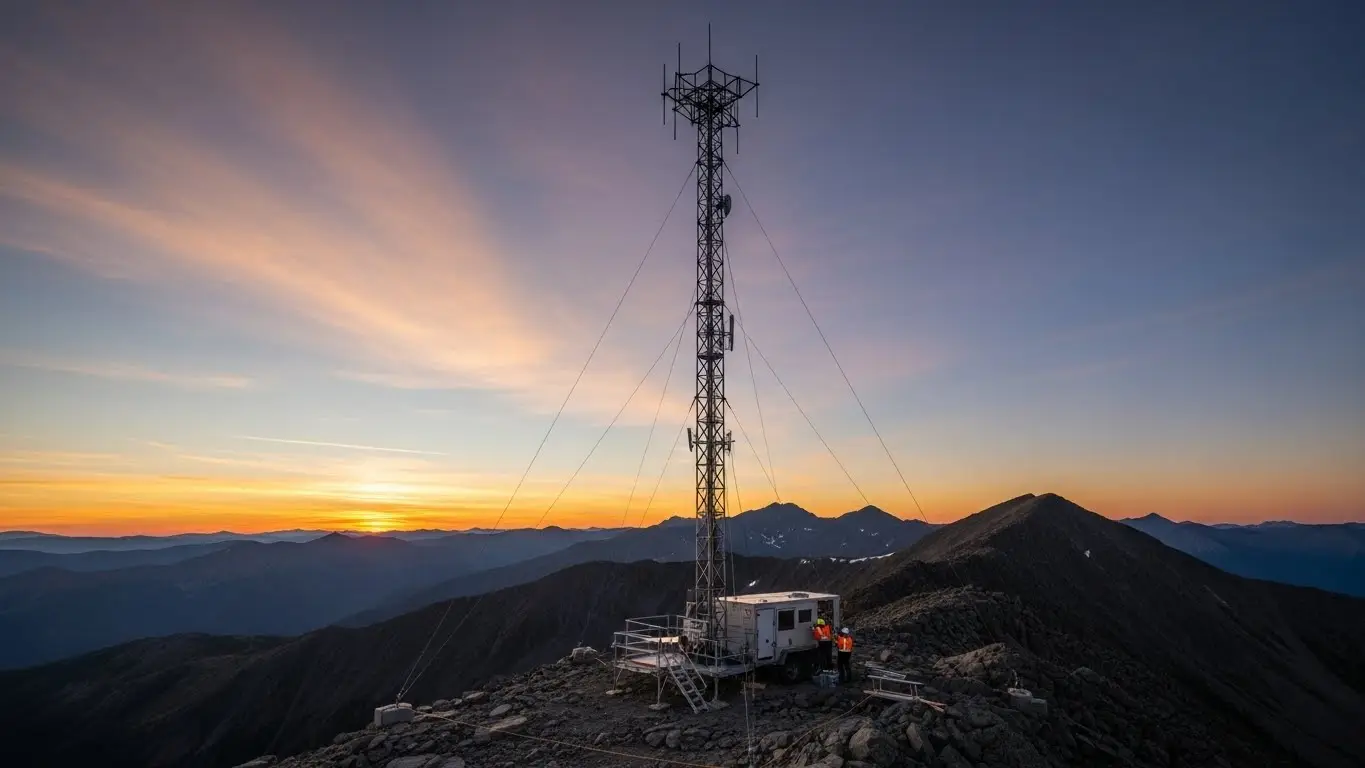
For telecom operators and government agencies, the "Golden Hour"—the first 60 minutes after a disaster—is critical. In 2024, network resilience isn't just about customer satisfaction; it's a lifeline. Remote communities and disaster zones rely entirely on these temporary structures when main grids fail. Ensuring your mobile communication towers for emergency response can survive harsh terrain and power outages is the difference between coordinated rescue efforts and chaos.
The Power Challenge: Hybrid vs. Traditional Diesel
The biggest threat to remote tower reliability isn't the wind—it's running out of fuel. Traditional diesel-only generators consume vast amounts of fuel and require frequent, expensive refueling trips.
The 2025 Standard: Hybrid Power Systems
Modern remote towers now integrate Solar Hybrid Generators. By combining solar panels, high-capacity lithium batteries, and a backup diesel generator, operators are seeing drastic improvements:
- Fuel Savings: Up to 60-70% reduction in diesel consumption.
- Maintenance: Generator runtime is reduced by up to 21 times, meaning fewer site visits.
- Autonomy: A hybrid site can often run for 30-40 days on a single fuel tank compared to just 2-3 days for a standard generator.
💡 Insight: For long-term recovery projects, utilizing temporary mobile towers with hybrid power is the only economically viable option for off-grid locations.
Connectivity Lifelines: Satellite vs. Microwave
Once the tower is powered, it needs a "backhaul" connection to the core network. In remote mountains or islands where fiber optic cables don't exist, you have two main choices.
Comparison of Remote Backhaul Technologies
| Feature | LEO Satellite (e.g., Starlink) | Microwave Relay | Fiber Optic |
| Setup Time | < 2 Hours (Rapid) | 1-3 Days (Requires alignment) | Months (Trenching required) |
| Reliability | High (Independent of ground) | Medium (Line-of-sight needed) | High (Unless physically cut) |
| Latency | Low (20-40 ms) | Very Low (< 1 ms) | Lowest (< 1 ms) |
| Best Use Case | Disaster zones, deep rural areas | Line-of-sight mountain chains | Urban/Suburban permanent sites |
For immediate disaster relief, LEO satellites are the game-changer for 2025, offering fiber-like speeds without the infrastructure.
Structural Integrity in Extreme Conditions
Reliability is also physical. A tower that sways too much disconnects the microwave link; a tower that collapses is a catastrophic failure.
XYTOWER Quality Standards
To ensure stability, high-quality emergency towers use hot-dip galvanized steel (ASTM A123 standard) which prevents rust for over 30 years, even in coastal or humid environments.
- Wind Load: Rapid deployment towers must be rated for at least 100 km/h (62 mph) winds when unguyed, and up to 160 km/h (100 mph) when properly guyed and anchored.
- Smart Monitoring: New "Smart Tower" sensors detect excessive tilt or vibration in real-time, allowing operators to retract telescopic masts before wind damage occurs.
Learn more about specific load ratings in our guide on rapid deployment mobile towers solutions.
Step-by-Step Deployment Timeline
How fast can you actually get a signal? Here is a realistic timeline for a professional crew deploying a Cell on Wheels (COW).
- Arrival & Assessment (0-15 mins): Team identifies level ground and checks for overhead power lines.
- Stabilization (15-30 mins): Outriggers are extended and locked; ground anchors are driven if wind is high.
- Mast Elevation (30-45 mins): The telescopic mast is raised pneumatically or mechanically.
- System Integration (45-60 mins): Power is switched on, and the satellite/microwave link creates the backhaul.
For a detailed breakdown of these times, read about rapid deployment telecom towers setup time.
Common Mistakes to Avoid
Even the best hardware fails if managed poorly. Avoid these common pitfalls in remote deployments:
- ❌ Ignoring Fuel Logistics: Assuming a fuel truck can reach a mountain site after a landslide. Solution: Use hybrid power to extend autonomy.
- ❌ Wrong Frequency Planning: Using 5G bands that have short range in vast rural areas. Solution: Stick to lower frequency (700MHz - 900MHz) LTE for maximum range.
- ❌ Neglecting Security: Batteries and copper cables are high-theft items. Solution: Use anti-theft cages and remote CCTV monitoring.
- ❌ Poor Grounding: Rocky soil provides poor electrical grounding, risking lightning damage. Solution: Bring chemical ground rods or earthing plates.
Expert Tips
1. Embrace IoT Remote Monitoring
Don't wait for the tower to go offline. Use IoT sensors to monitor fuel levels, battery health, and wind speed remotely. This "predictive maintenance" can reduce site visits by 40%.
2. Redundancy is Key
Never rely on a single backhaul. If you use microwave as your primary link, have a Starlink terminal on standby as an automatic failover.
3. Test Before You Travel
Always perform a "dry run" deployment in your yard before shipping the tower to a remote site. A missing bolt in the city is an annoyance; a missing bolt in the mountains is a mission failure.
Frequently Asked Questions
A standard diesel-only tower typically runs for 2-3 days. However, modern hybrid units (solar + battery + diesel) can operate for 30 to 40 days without refueling, depending on the sunlight availability and power load.
Yes, but they require Line-of-Sight (LOS) for microwave backhaul. If LOS is blocked by peaks, you must use satellite backhaul. You also need a specialized "skid-mounted" tower or COLT with 4x4 capability to reach the site.
Most rapid deployment towers are rated for 100 km/h (62 mph) operational wind speeds. To withstand higher winds (up to 160 km/h), the mast must be lowered, or guy wires must be installed and anchored securely.
Yes, they are "technology agnostic." However, 5G requires more power and has shorter range. For remote reliability, 4G LTE is often preferred for its wider coverage area and lower power consumption.
Prices vary based on height and payload, but a fully equipped industrial COW typically ranges from $30,000 to $100,000. Leasing options are available for short-term emergency needs.
Routine maintenance includes checking generator oil/filters, cleaning solar panels, tensioning guy wires, and testing battery health. Smart monitoring systems can automate health checks and alert you only when necessary.
Key Takeaways
- Hybrid is Essential: Solar/diesel hybrid systems increase reliability and reduce fuel trips by 70%.
- Satellite Backhaul: LEO satellites (like Starlink) are the fastest way to connect off-grid towers in 2025.
- Rugged Build: Ensure your tower uses galvanized steel to survive decades of weather exposure.
- Smart Monitoring: Use IoT sensors to track wind, power, and security without visiting the site.
- Rapid Response: With the right training, a site can be fully operational in under one hour.

Hey, I’m Chunjian Shu
"X.Y. Tower: Reliable, innovative solutions for high-quality towers and electrical equipment with professional service.
