
How Long Does It Take to Deliver Telecom Towers to Brazil?
2025-12-16
How long does it take to deliver telecom towers to Brazil? Generally, the total lead time from order placement to site delivery in Brazil ranges from 60 to 90 days when importing from major manufacturing hubs like China. This timeline includes 2–4 weeks for production, 30–45 days for ocean freight, and 1–3 weeks for Brazilian customs clearance and inland transportation.
Introduction
Navigating the logistics of importing infrastructure into South America is complex. You aren't just buying steel; you are buying a timeline. If you are a procurement manager or project lead, you know that a delay in tower delivery doesn't just push back construction—it stalls network activation and bleeds revenue.
In my experience overseeing exports to the LATAM region, the "Brazil Cost" (Custo Brasil) is real. It isn't just about distance; it is about bureaucracy. This guide breaks down every stage of the journey, from the factory floor to the remote installation site, helping you plan your project with precision.
What is the Typical Timeline Breakdown for Tower Delivery?
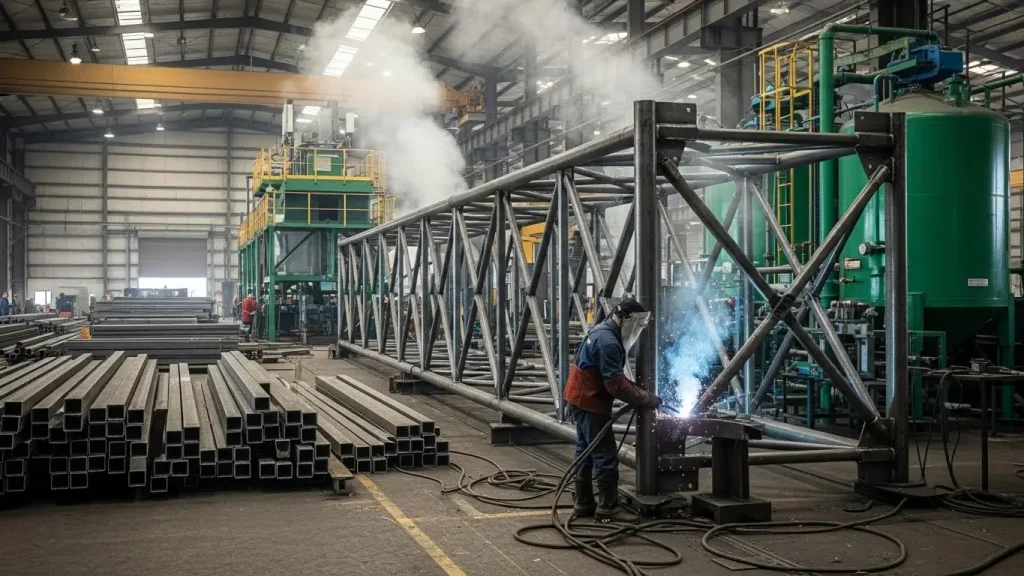
The typical delivery timeline to Brazil is split into three main phases: production (15–30 days), ocean freight (35–50 days), and customs/inland transport (10–20 days). Total lead time often settles around 75 days, though expedited shipping or customs delays can shift this window significantly.
Detailed Phase Breakdown
To effectively manage your project Gantt chart, you need to look at the granular details of these phases.
1. Production Phase (Weeks 1–4)
This is where your specifications turn into physical assets. The clock starts the moment the manufacturer receives your down payment and confirmed drawings.
- Raw Material Procurement: Sourcing high-grade steel usually takes 3–7 days unless the factory keeps significant stock.
- Fabrication & Galvanization: Cutting, drilling, and welding the lattice structures followed by hot-dip galvanization. This is the most critical quality control step.
- Trial Assembly: A reputable manufacturer will assemble a prototype to ensure fitment before mass packing.
2. Logistics & Ocean Freight (Weeks 5–10)
Once the towers are packed into containers (usually 40ft High Cubes), they move to the port of origin (e.g., Qingdao or Shanghai).
- Port Handling (Origin): 2–5 days for customs declaration and loading.
- Sea Transit: The journey to major Brazilian ports like Santos, Paranaguá, or Rio de Janeiro takes the bulk of the time. Trans-shipment stops in Singapore or Europe can add delays.
3. Arrival & Clearance (Weeks 11–13)
This is the variable that catches most importers off guard. Brazil has some of the strictest import regulations in the world.
- Customs Clearance (Desembaraço Aduaneiro): Without perfect documentation, your containers can sit for weeks.
- Inland Transport: Moving heavy steel from the port to a remote cell site in the Amazon or a city center in São Paulo.
How Does Manufacturing Efficiency Impact the Schedule?
Manufacturing efficiency directly impacts the schedule by determining how quickly raw steel is converted into galvanized tower sections. An optimized factory with automated CNC lines can reduce production time by 30%, finishing a standard order in roughly 2 weeks instead of 4.
The Role of Material Selection
The type of material you choose dictates the manufacturing speed. Standard angle steel is widely available and quick to process. However, if your project requires specialized steel grades for high-load towers, lead times increase.
Understanding the nuances of steel grades and materials for telecom towers is vital. High-tensile steel (like Q420 or Gr.65) might need to be specially ordered from steel mills if the manufacturer doesn't stock it, potentially adding 10 days to your timeline.
Furthermore, the complexity of the tower design matters. A standard 4-legged angular tower is faster to produce than a complex tubular monopole or guyed mast because of the welding requirements.
Expert Note: Always ask your manufacturer for their current "production slot" availability. Even the fastest factory cannot help you if they are fully booked for the next month.
Which Brazilian Ports Offer the Fastest Transit Times?
The fastest transit times from China usually route to the Port of Santos (approx. 32–38 days) or the Port of Paranaguá (35–40 days). Ports further north, like Manaus or Suape, may require trans-shipment, often adding 7–10 days to the total voyage time.
Port Comparison Table
Selecting the right port of entry is a strategic decision based on your final installation site. Do not ship to Santos if your project is in the northeast; the inland trucking costs and time will destroy your budget.
| Destination Port | Typical Transit Time (from China) | Key Characteristics | Best For Projects In |
| Santos (SP) | 32–38 Days | Largest port, frequent vessels, high congestion risk. | São Paulo, Minas Gerais, Rio de Janeiro |
| Paranaguá (PR) | 35–40 Days | Efficient for bulk cargo, slightly less congestion. | Southern Brazil (Paraná, Santa Catarina) |
| Rio Grande (RS) | 40–45 Days | Deep draft, slower connection. | Rio Grande do Sul |
| Suape (PE) | 40–50 Days | Key hub for the Northeast, often involves trans-shipment. | Northeast Region |
| Manaus (AM) | 50–60 Days | River port, requires barge transport, complex logistics. | Amazon Region |
The "Amazon Factor"
If you are deploying towers in the Amazon region, rely on the Port of Manaus. However, be aware that river levels affect accessibility. During dry seasons, large vessels may not be able to dock fully laden, causing massive delays.
What Documentation is Required to Clear Brazilian Customs Quickly?
To clear Brazilian customs quickly, you must provide a Commercial Invoice, Packing List, Bill of Lading, and Certificate of Origin. Crucially, the importer must have an active RADAR license (Siscomex) before the cargo ships, or the goods will be blocked upon arrival.
Avoiding the "Canal Vermelho" (Red Channel)
In Brazil, customs inspections are categorized by "channels."
- Green Channel: Automatic clearance (Fast).
- Yellow Channel: Document check required (Medium).
- Red Channel: Physical inspection of goods required (Slow).
To stay out of the Red Channel, your documentation must be flawless. The description of goods on the invoice must match the NCM code (Nomenclatura Comum do Mercosul) exactly.
Common Pitfalls:
- Inaccurate Weights: If the packing list says a bundle weighs 2,500kg and the scale reads 2,550kg, you face fines and delays.
- Wood Packaging: All wood pallets or crates must be fumigated and stamped ISPM-15. If they aren't, the whole container might be rejected.
- Licensing: Ensure your company has the correct RADAR limit to import the value of the shipment.
This is why it is critical to choose a tower manufacturer with China export experience. An experienced partner knows how to draft the Commercial Invoice to satisfy specific Brazilian bureaucratic requirements, listing the net weight, gross weight, and HS codes exactly as the Receita Federal expects.
Can Tower Design Choices Speed Up Delivery?
Yes, choosing modular or standardized tower designs can significantly speed up delivery. Standard designs often utilize stock materials and pre-configured manufacturing templates, shaving 1–2 weeks off the engineering and fabrication phase.
Steel vs. Aluminum: A Logistics Perspective
While steel is the standard for heavy-duty towers, alternative materials can influence logistics. For example, aluminum is lighter, which might seem easier to ship, but it is less common in heavy telecom infrastructure.
When you analyze aluminum vs. steel mast strength, you find that steel is usually the superior choice for the heavy wind loads found in Brazil's coastal areas. While aluminum saves weight for air transport, it rarely speeds up ocean freight and can be slower to source in the required high-strength grades.
The Hybrid Approach
Some project managers opt for "Hybrid" deliveries. They air-freight the anchor bolts (which are needed first for the foundation) and ocean-freight the tower body. This allows civil works to begin while the main structure is still at sea, effectively compressing the project timeline by 3–4 weeks.
How Do Internal Logistics in Brazil Affect Final Delivery?
Internal logistics in Brazil can add 3 to 15 days to the timeline depending on road infrastructure and weather. Brazil relies heavily on trucks, and road conditions in interior states like Mato Grosso or Pará can be perilous and slow.
The Last-Mile Challenge
Getting the container to the port is the easy part. Getting the tower sections to a hill-top site is the hard part.
- Road Quality: In the rainy season, unpaved roads turn to mud. Heavy trucks carrying 20 tons of steel can get stuck for days.
- Permits: Oversized loads (if you are shipping large monopole sections) require special transit permits (AET), which take time to issue.
- Offloading: Does the site have a forklift? Usually not. You often need a crane truck (Munck) to offload the bundles.
If you are planning to install a modular mobile tower step-by-step, the delivery vehicle must be able to reach the exact foundation point. If the truck can't get there, you are looking at manual handling—carrying steel piece by piece—which is a massive delay.
How Do Weather Conditions Impact Shipping and Installation?
Weather impacts shipping via typhoon delays in the South China Sea and installation via rainy seasons in Brazil. High humidity and storms can delay vessel departures and make unpaved Brazilian roads impassable for delivery trucks.
Seasonal Risks to Watch
- China (August–October): Typhoon season can close ports like Ningbo or Shenzhen for days, creating a backlog.
- Brazil (December–March): The summer rainy season. In states like Minas Gerais and Bahia, heavy rains wash out roads.
Furthermore, weather affects the tower's longevity and maintenance needs. Brazil has high humidity and coastal salt spray. When planning your timeline, consider that you might need higher-grade galvanization (85µm or more) for these environments. This extra coating thickness takes slightly longer to apply but is essential for telecom tower maintenance in extreme weather.
Summary Checklist for Faster Delivery
If you need your towers in Brazil as fast as possible, follow this checklist:
- Finalize Designs Early: Do not change drawings after the deposit.
- Split Shipments: Ship anchor bolts first via air or LCL (Less than Container Load).
- Check RADAR: Ensure your import license is active before the ship sails.
- Pick the Right Port: Route to the port closest to the site, not just the cheapest one.
- Hire a Despachante: Use a specialized Brazilian customs broker who knows steel imports.
By understanding the logistical chain from the steel mill in China to the foundation in Brazil, you can mitigate risks and ensure your network goes on air on time.

Hey, I’m Chunjian Shu
"X.Y. Tower: Reliable, innovative solutions for high-quality towers and electrical equipment with professional service.
