
How Do I Choose Between Guyed Towers and Self-Support Towers?
2025-12-15
The choice comes down to land availability versus budget. Choose a Guyed Tower if you have ample rural land and need a cost-effective solution for heights over 100 meters. Choose a Self-Support Tower for urban sites with limited space (under 10% of tower height) where long-term maintenance must be minimized.
Why This Matters
Selecting the right tower structure is the single most critical decision in your infrastructure project's planning phase. Making the wrong choice can lead to wasted budget on unnecessary steel or, worse, a structure that cannot be legally erected due to land zoning restrictions.
For our clients at X.Y. Tower, understanding the trade-off between "footprint" and "steel weight" is essential. While a guyed tower might save you 40% on material costs, the land lease requirements could erase those savings if you are in a semi-urban area. This guide breaks down the data you need to make a profitable decision for your transmission or telecom project.
What Are The Differences?
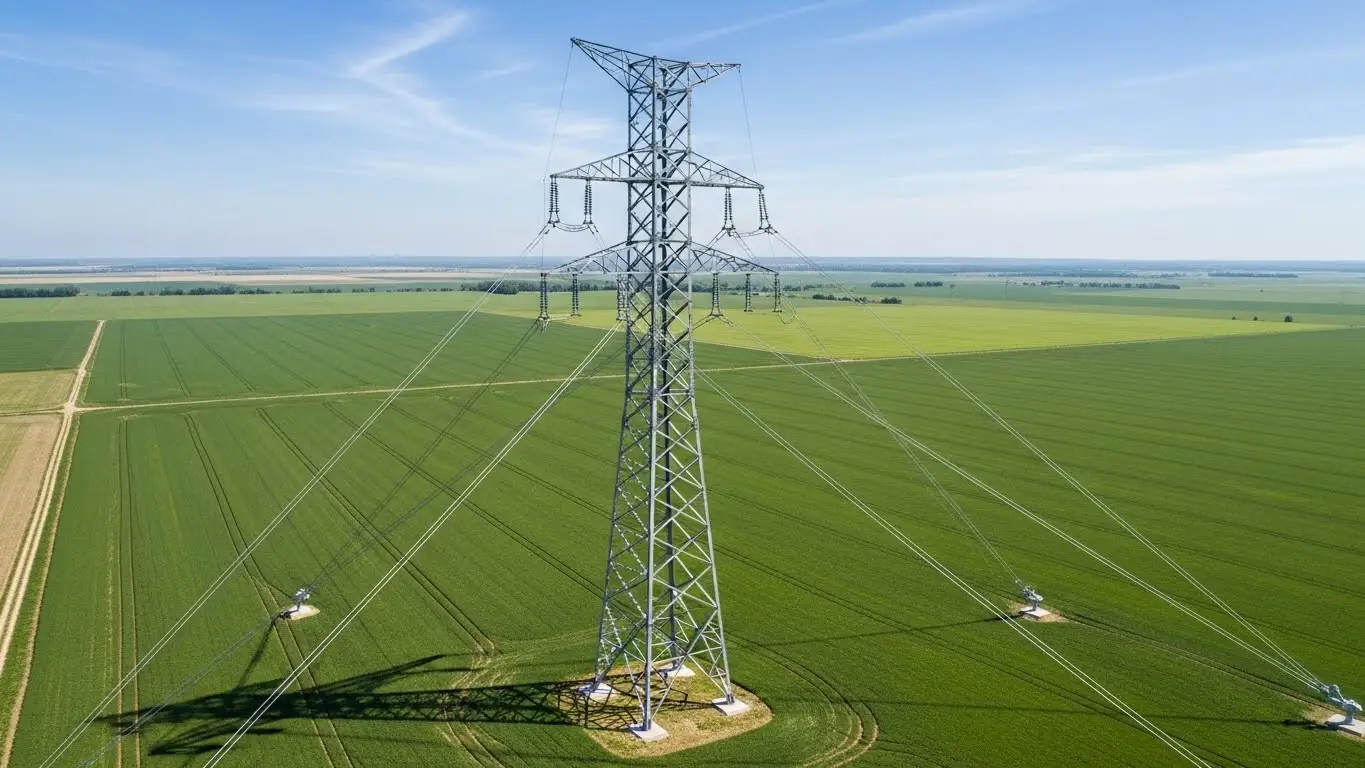
Before comparing costs, it is vital to understand the structural mechanics of these two designs.
Guyed Towers
These are slender, lightweight structures that rely on tensioned cables (guy wires) anchored to the ground for stability. Because the wires handle the lateral loads (wind and ice), the tower shaft itself can be much thinner and lighter.
- Best for: Rural areas, flat terrain, and extreme heights (up to 2,000 ft).
- Key Feature: Requires a large "guy radius" (typically 70-80% of the tower height).
Self-Support Towers (Lattice)
These are robust, freestanding structures with a wide base that tapers as it goes up. They rely on their own weight and wide stance to resist wind and gravity.
- Best for: Urban cities, industrial parks, and rooftop installations.
- Key Feature: Small footprint; the base width is usually just 10-15% of the tower height.
Comparison: Guyed vs. Self-Support Towers
Here is a quick look at how these two designs stack up against each other based on 2024-2025 industry standards.
| Feature | Guyed Tower | Self-Support Tower |
| Initial Cost | 💲 Low (Uses less steel) | 💲💲 High (More steel required) |
| Land Required | ❌ Huge (Acres of land) | ✅ Minimal (Small plot) |
| Maintenance | ⚠️ High (Cable tension checks) | ✅ Low (Structural checks only) |
| Installation Time | ⚡ Faster (Lighter sections) | ⏳ Slower (Complex assembly) |
| Max Height | 📈 Very High (2,000+ ft) | 📉 Moderate (Usually <500 ft) |
| Wind Load | ⭐ Good (Low profile) | ⭐⭐ Excellent (Rigid frame) |
When to Choose a Guyed Tower
You should opt for a lattice guyed tower if your project is located in a rural area where land costs are low. Because these towers use significantly less steel than self-supporting models, they are the most economical choice for high-altitude requirements.
Ideal Scenarios:
- Broadcasting: You need a mast 300+ meters high for radio or TV transmission.
- Rural Power: You are running high-voltage lines across open farmland.
- Wind Measurement: You need a temporary or permanent meteorological mast.
💡 Pro Tip: Ensure you own or can lease the land for the anchor points. A 100-meter guyed tower might require anchors placed 70-80 meters away from the center, effectively occupying a massive circle of land.
When to Choose a Self-Support Tower
A self-supporting tower is the superior choice when land is expensive or unavailable. If you are building in a city, near a highway, or in a residential zone, the compact footprint is non-negotiable.
Ideal Scenarios:
- Urban Telecom: 5G/4G base stations in densely populated cities.
- Small Compounds: Fenced utility substations with no room for guy wires.
- Long-Term Ownership: You want to minimize the recurring costs of tensioning cables.
For a deeper dive into the structural advantages, read about what are the benefits of lattice steel tower designs. The rigidity of a 3-legged or 4-legged lattice design offers exceptional resistance to torsion (twisting), making it safer for heavy microwave dishes.
Cost Breakdown: Steel vs. Land
The most common question we get is about price. Does a guyed tower actually cost less?
Technically, yes. The material cost for a guyed tower is often 30-50% less than a self-supporting tower of the same height because it uses lighter steel members. However, this calculation changes if you have to lease land.
- Scenario A (Rural): Land is cheap ($0.50/sq ft). The guyed tower is the clear winner.
- Scenario B (Urban): Land is expensive ($50/sq ft). The massive land requirement for guy anchors makes the guyed tower more expensive than simply paying for the extra steel of a self-support tower.
If you are considering monopoles as an alternative, you might wonder does a guyed mast tower cost less than monopoles? Generally, guyed towers are still cheaper in raw materials than heavy steel monopoles, but monopoles are often preferred in cities for aesthetics.
Common Mistakes to Avoid
- Ignoring Soil Conditions: Guyed towers rely entirely on their anchors. If the soil is sandy or swampy, installing secure anchors can become shockingly expensive.
- Underestimating Maintenance: Guy wires stretch over time. They require re-tensioning and professional inspection every 3-5 years. Self-support towers typically only need inspection every 5-7 years.
- Forgetting Ice Load: In cold climates, ice buildup on guy wires can increase the weight load dramatically, potentially causing failure if not calculated during the design phase.
Expert Tips for 2026
- Future-Proofing: 5G equipment is heavy. Whether you choose guyed or self-support, ensure your design includes a 15-20% "future load" buffer for additional antennas.
- Galvanization is Key: At X.Y. Tower, we recommend hot-dip galvanization for all tower types to ensure a 30+ year lifespan, regardless of the design you choose.
- Security: If vandalism is a concern in your area, self-support towers are safer. Guy wires are vulnerable to tampering, which can bring down the entire structure.
Frequently Asked Questions
What is the maximum height for a self-supporting tower?
While engineering allows for great heights, self-supporting towers become exponentially expensive above 150 meters (500 ft) due to the massive base width required. For heights above this, guyed towers are standard.
How much land do I need for a guyed tower?
You typically need a radius of 70% to 80% of the tower's height. For a 100-meter tower, you need anchor points roughly 80 meters away from the base in three directions.
Are guyed towers safe in high winds?
Yes, when properly tensioned. The guy wires actively pull the tower down, locking it in place. However, they generally have more "twist and sway" than rigid self-supporting towers.
Which tower type is faster to install?
Guyed towers are generally faster to erect because the tower sections are lighter and easier to stack. However, the foundation work for the anchors can add time depending on soil conditions.
Can I install a self-support tower on a rooftop?
Yes. Because they do not require wide anchor points, smaller self-supporting lattice towers are frequently installed on building rooftops for telecommunications.
How often do guy wires need to be replaced?
Guy wires typically last 15-20 years depending on the environment (coastal areas corrode faster). They need to be inspected and greased regularly to maintain this lifespan.
What is the lifespan of a galvanized steel tower?
With proper hot-dip galvanization (like we offer at X.Y. Tower), both guyed and self-supporting towers can last 30 to 50 years with minimal structural maintenance.
Is a monopole better than a self-support tower?
Monopoles are prettier and take up the least space, but they are more expensive per foot and cannot reach the same heights or carry as much heavy equipment as a lattice self-support tower.
Key Takeaways
- Check Your Space: If you have limited ground space, a self-supporting tower is your only viable option.
- Check Your Budget: If you have acres of land and a tight budget, a guyed tower offers the best ROI.
- Maintenance: Be prepared for higher ongoing maintenance costs with guyed towers due to cable tensioning.
- Height: For extreme heights (over 150m), guyed towers are the industry standard.
- Consult Experts: Always get a soil analysis before finalizing your decision—it dictates your foundation costs.

Hey, I’m Chunjian Shu
"X.Y. Tower: Reliable, innovative solutions for high-quality towers and electrical equipment with professional service.
