
Steel Tower Fabrication: Build Quality Into the Process, Not the Final Inspection
2026-08-25
The number of members in a tower can be hundreds or thousands, and they may look the same however, they are not interchangeable. All angles, plates, hole patterns and pieces have to continue to depict the approved design following cutting, punching, drilling, welding, galvanizing and packing.
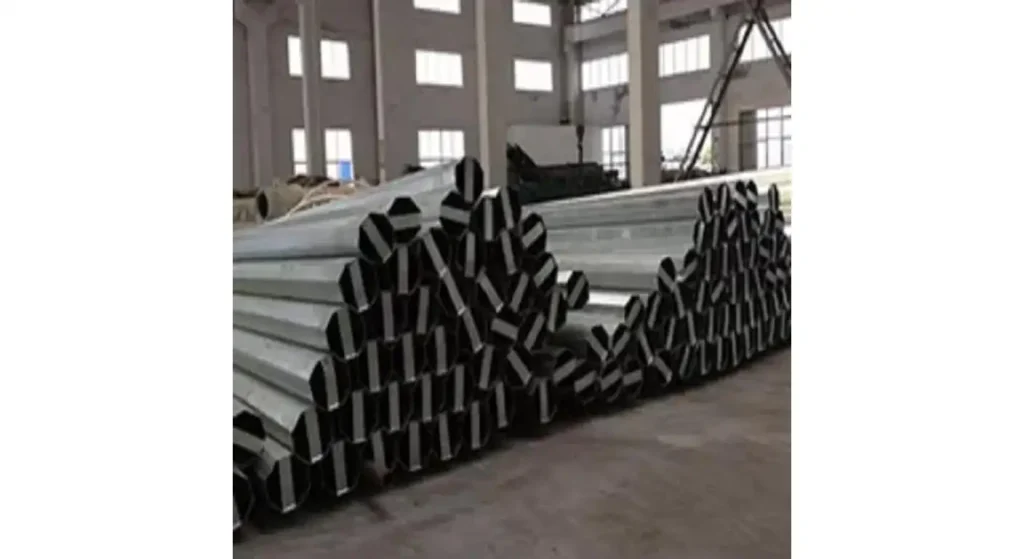
This is why for experienced EPC contractors and for utility buyers, the steel tower fabrication should be considered not only by its production capacity but also by its controlled production system, and the finished steel tower's appearance with galvanized steel.
The important question is: “Can this factory make towers?”
It's: Does the factory have the ability to continuously produce the same approved tower without having little production changes become site issues?
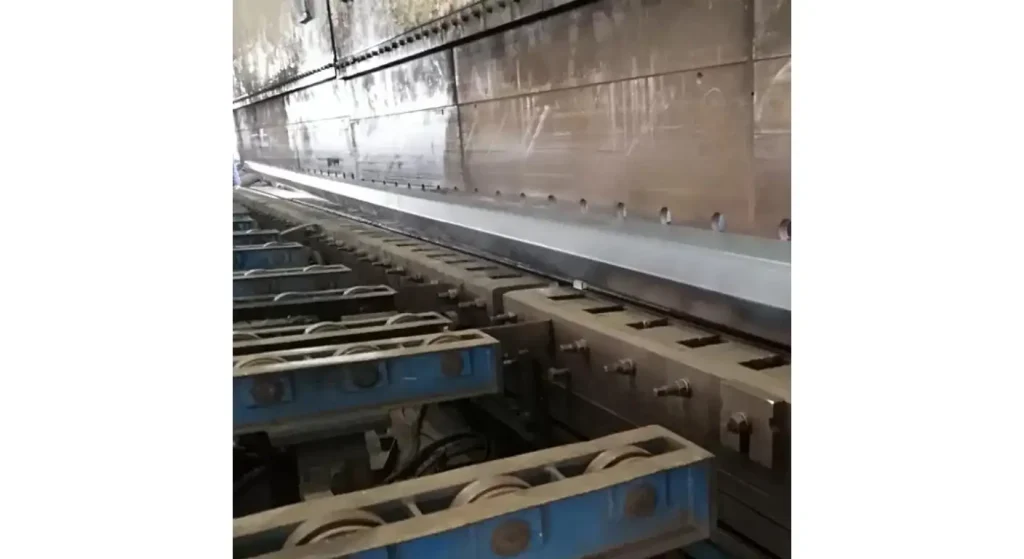
When it comes to fabrication, it should be about a release package, not the machine.
That's not to cut steel in the first manufacturing process.
It should be positively affirming what is actually "approved" for production.
A controlled package containing the following information should be available to the factory before the material is introduced to the production line: current drawings, member schedules, material specifications, hole information, connection information, piece marks, coating specifications and applicable revision.
This is a step between engineering and manufacturing. The Tower Design Solutions of XY Tower show that design and fabrication are not necessarily separate departments, but should be considered a set of interrelated activities.
Holes, plates, bolts, drawings and packing information may also be impacted with a revision that changes one cross-arm member. Changing only the drawing is not enough to make the change.
Thus, good fabrication starts with the question:
Is the revision known to all on the factory floor?
Walk the Steel through the Factory
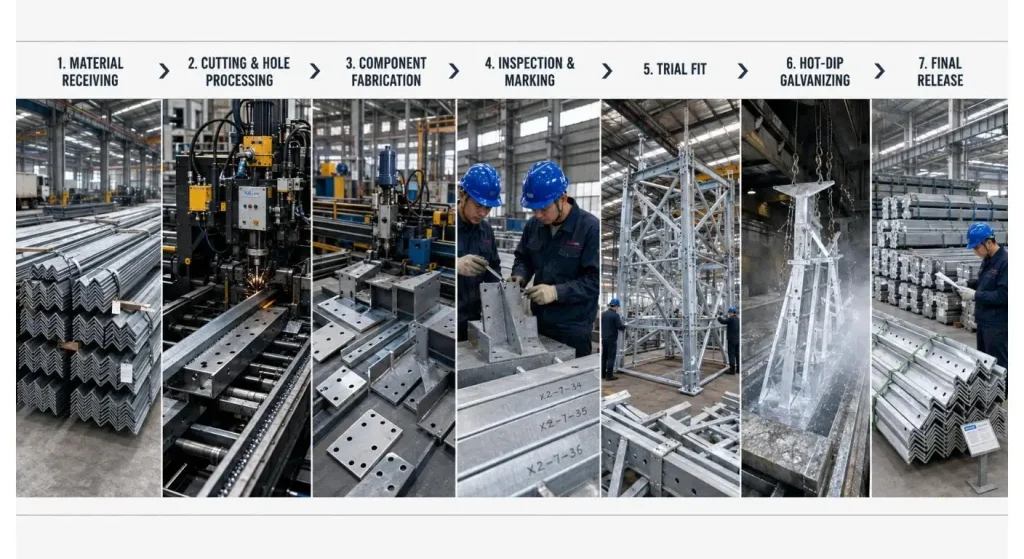
As soon as drawings are released, steel enters a process of material identification, cutting, punching and/or drilling, component processing, assembly (if necessary), marking, galvanizing, and inspection and packing.
It isn't just a question of whether or not each operation exists.
What is key is where the factory sets its control points.
If it is found that it is an incorrect hole pattern, and no additional one hundred members have been processed, it is a relatively small problem. The same mistake is very costly if it is found after galvanizing or during erection.
As such, the manufacturer who will make a Transmission Line Steel Tower should be able to trace a component back through the production process instead of simply relying on the end product – the tower steel.
Quality is less costly to manufacture if problems are prevented as close to the process that generates the problem.
Transitions are a crucial part of any process
When a factory produces products in large volumes there is an unusual risk: that the factory can reproduce the error very efficiently.
That's why some buyers neglect to pay a lot of attention in first piece verification.
Members from a large batch should be checked against approved production information with regard to critical dimensions, member length, spacing of holes, edge distance, orientation and identification prior to releasing a large batch.
While repeatability is a goal of CNC equipment, it enhances repeatability. Hundreds of such incorrect members can be reproduced by a machine programmed with incorrect information.
Thus, the first one serves as a 'bridge' between the digital production file and the physical tower.
| Factory Area | Question to Ask | Warning Sign |
| Drawing Release | How is the latest production revision identified? | Different revisions visible at the same workstation |
| CNC Processing | How is the first processed member verified? | Production starts before first-piece confirmation |
| Work-in-Process | How are similar members kept distinguishable? | Unmarked or mixed components |
| Quality Station | How are rejected parts isolated? | Nonconforming parts remain with accepted material |
| Galvanizing Return | How are piece marks retained after coating? | Members require identification by appearance |
| Packing Area | Can bundles be traced to tower and shipment? | Packing relies mainly on worker memory |
It's a very simple rule:
Always check the procedure first, before taking the volume for granted.
Never use the same fabrication rule for all parts of a steel tower!
Not all parts take the same path of manufacture to the tower.
Bolted connections are very critical to angle-lattice structures. Welding is sometimes necessary for the plates, brackets, base assemblies and auxiliary structures. Still different fabrication requirements are added by tubular or gantry structures.
At the factory, the preparation of the joints, welding order, fixture condition and distortion are important factors to be controlled in the case of welding. Hole relationship and orientation of angle plus mating-part fit may be more important than the appearance of a single piece, for bolted lattice members.
XY Tower's Steel Gantry Tower Design and Fabrication page is a helpful illustration of the reason that planning for fabrication ought to be done after the structure is to be fabricated.
It is therefore not the case that "the better process is the one where you have more machines.
It is the process that corresponds to the component.
Galvanizing is NOT a Decorative Step, but an Additional Stage in the Manufacturing Process.
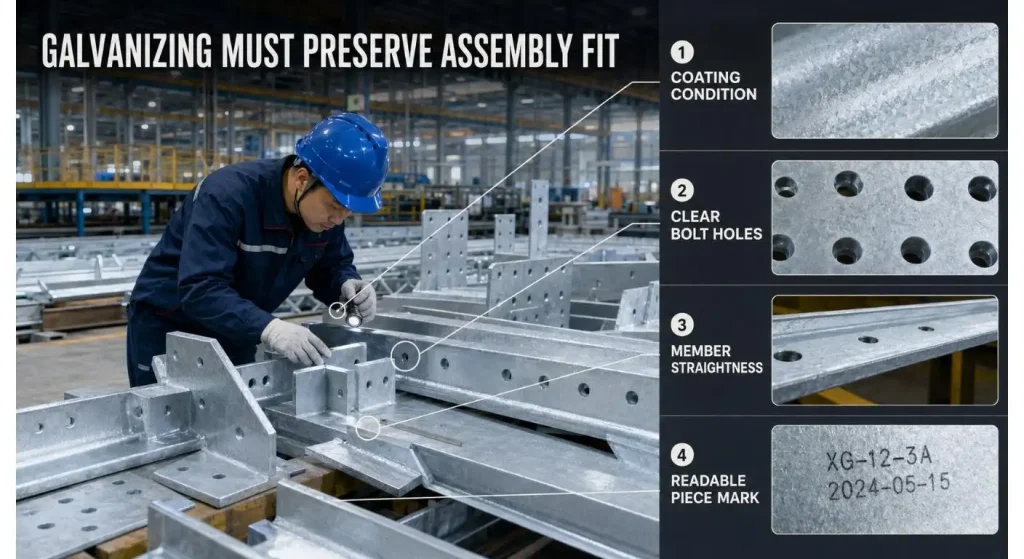
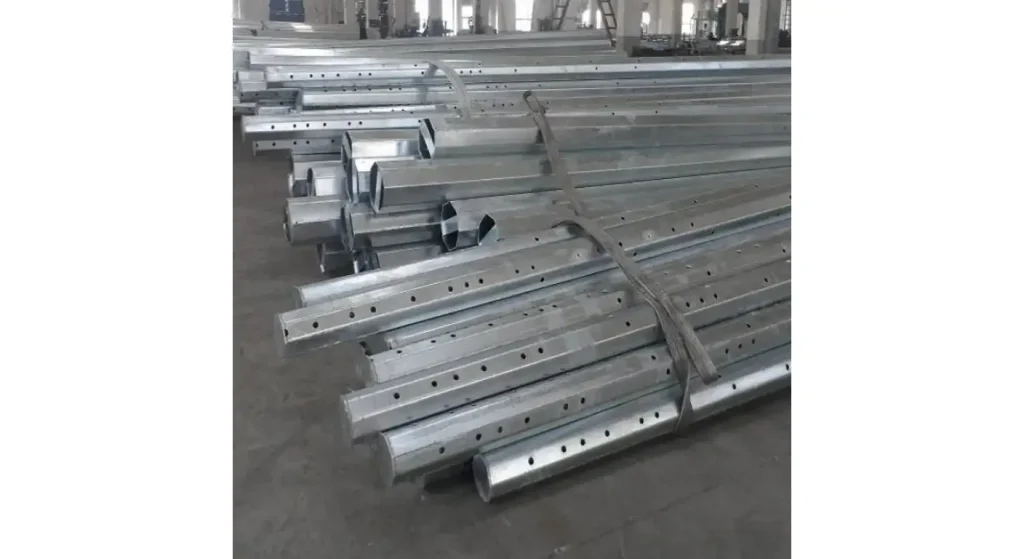
Hot dip galvanizing is considered to be the ultimate finishing. From a fabrication point of view however it is another production operation that the geometry of the component needs to pass through.
A member which fits when galvanized should be usable once galvanized.
It is therefore important that the coating condition, blocked holes, local zinc accumulation, distortion, handling damage, and readability of ID marks are all inspected
This is especially true for export projects in which the components are likely to cover thousands of kilometres before assembly is even attempted.
While there is a need for corrosion protection this must not be at the expense of coating quality and assembly quality.
The question must be a yes/no question.
Not all towers need to be photographed as they're assembled.
It is most effective when used in response to a question of uncertainty.
Trial fitting should be considered for a new tower head and unknown connection, a complex cross-arm or a highly connected joint (or first item produced) where a number of individually satisfactory components are required to operate together.
To verify relationships between members, bolt accessibility, hole orientation, interface size and sequence of assembly.
This is particularly important for custom-built structures. The Custom Tower Design service at XY Tower serves as an indication of how towers are project specific, and if they have a different geometry or loading than is standard.
Therefore it is recommended that trial assembly should be targeted at interfaces where a single dimensional inspection is not able to tell the whole story.
Final Inspection is not the time for Quality Creation!
A final inspector can't make a quality tower out of a tower which has been put through an uncontrolled process.
It is very useful to have a final inspection to ensure the result. It cannot be assumed that it will find all the errors that are produced in the production process.
Quality evidence is built up during the manufacture: material identification, dimensional check, first piece record, if applicable, welding or hole inspection, galvanizing inspection, trial-fit record, nonconformance closure record and shipment record.
Hence when considering the purchasing of a factory, it will be necessary for the buyer to look past the best tower the factory can produce.
XY Tower's About Us page displays the side of production-equipment that is part of tower manufacturing, but during a supplier assessment buyers must track the movement of information and identification to and from those machines.
It is handy to have a "clean" workshop.
It is better to have a controlled production history.
In a follow-up to the notorious "Hacking the Tower," some are suggesting that it's time to release the batch.
The last question should be whether or not the production batch is recordable.
Is the supplier able to determine which revision of the drawing he used? Which was the type of steel that was processed? Which pieces did which tower have? Are any nonconforming parts closed prior to packing? Are inspection records available to see for the shipment?
Sometimes, informal control seems to be effective for one tower.
Generally it is not scalable for a transmission project with hundreds of structures.
A good steel tower fabrication process can translate to approved engineering to repeatable physical parts and maintain that relationship until the steel arrives at site.
It's what the buyer is buying: that, not the final coat of zinc.
Conclusion
What happens between the drawing release and shipment release should be the criteria of evaluating steel tower fabrication.
Machines for cutting, drilling, welding stations and galvanizing facilities are crucial, but are only as valuable as the control system that ties them together.
Being able to make large quantities of steel isn't the best supplier for EPC contractors and utilities. That's the one that can demonstrate the first tower, the 50th tower and the last tower were all made in the same controlled engineering intent.
FAQs
Q1. What is the content of the steel tower manufacturing?
Typical steel tower fabrication processes include material preparation, cutting, punching or drilling, steel part processing, marking, trial fitting (if necessary), galvanizing, inspection and packing. Actual path will vary depending on the type of tower and project requirements.
Q2. Why is it important to carry out first piece inspection?
It validates the production information to make sure that it is correct before volume production is commenced. It is difficult to correct a whole batch of error, but it is easy to correct the first error.
Q3. Does each and every steel tower need to be trial assembled?
No. Trial assembly is most useful for new designs, complex interfaces, special heads on towers, unfamiliar connections or first production units where fit can't be properly determined from individual parts.
Q4. If the quality of the tower is only to be checked afterward, should this be done after galvanizing?
No. Dimensional and manufacturing controls should be done during the manufacturing process. An incorrect hole pattern or the wrong orientation of members or uncontrolled drawing change cannot be corrected during final galvanizing inspection.
Q5. What are things that EPC buyers should ask for prior to delivery?
They should ask for project specific production and inspection records, ascertain that nonconformances are closed and ensure that the piece identification and packing information is correct to the approved tower and shipment.

Hey, I’m Chunjian Shu
"X.Y. Tower: Reliable, innovative solutions for high-quality towers and electrical equipment with professional service.
